
Mix Vegetable Curry

Swasthi Shreekanth
Chef
“Swasthi Shreekanth is a celebrated Indian culinary blogger and founder of Swasthi’s Recipes. She is renowned for her meticulously tested, authentic Indian recipes that simplify traditional cooking for millions globally.”

Aarif
Food Journalist
Aarif is a devoted content writer at Regional Heritage Food (RHF), passionate about cooking and travel. He shares his culinary experiences and discoveries, inspiring others to explore new recipes and flavors.
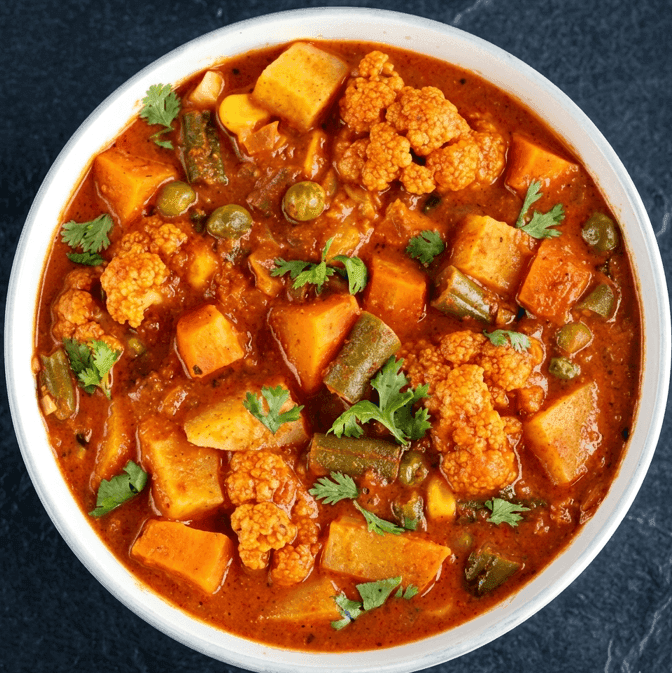
A Comforting Home-Style Mixed Vegetable Curry Simmered in Onion, Tomato and Cashew Cream Gravy
In South Asian cooking, vegetables are never an afterthought. The cuisine has spent centuries building an entire tradition around them, and the mixed vegetable curry is one of the most practical and beloved expressions of that tradition. It is the dish that happens when the fridge holds a little of everything and the kitchen needs to produce something that satisfies everyone at the table. Done properly, it is not a compromise. It is a genuinely layered, fragrant, deeply satisfying curry that works as a weekday dinner or a party dish with equal confidence.
Swasthi's version is made entirely without heavy cream, yogurt, or coconut milk in its base. The creaminess comes from cashews soaked in hot water and blended to a smooth puree, which is stirred into the onion tomato masala before the vegetables go in. This is exactly the way the curry is made in Indian homes, and it is the reason the dish has a depth of flavour and a silky texture that most restaurant versions cannot match. The cashew cream is optional. Thick coconut milk or nut butter both work as substitutes, and readers who have tried all three confirm the curry is delicious every way.
The vegetable selection in this recipe is a considered one. Potatoes and carrots go in first because they need the most time. Cauliflower, peas, green beans, and sweet corn follow. The potatoes are cut smaller than everything else so that all the vegetables reach tenderness at the same point. It is a small detail that makes a visible difference in the finished dish and one that distinguishes Swasthi's recipe from the many versions that produce a curry where some vegetables are overcooked while others are still firm.
Why This Recipe Works Better Than Others
The onion tomato masala is built in layers, not dumped all at once.
The foundation of this curry is the onion tomato base, and Swasthi's method treats it with the respect it deserves. Onions go in first and are fried until light golden, not merely translucent, because that extra colour is where the sweetness of the base develops. Ginger garlic paste follows and is cooked separately until the raw smell disappears, a step many recipes skip and then wonder why their curry tastes flat. Ground spices go in next, before the tomatoes, so they bloom in the oil rather than steaming in the tomato liquid. Each layer builds on the last, and the result is a masala that smells and tastes fully cooked before a single vegetable has touched the pan.
Cashew cream adds richness without making the curry heavy.
The choice to use cashew cream instead of heavy cream or dairy in the base changes the character of the curry in two important ways. First, it keeps the dish naturally vegan, which means the same recipe works for every guest at the table without modification. Second, and more importantly, cashew cream adds a mild nuttiness and a silky body to the gravy without the richness becoming overwhelming. A curry made with heavy cream can feel cloying after a few bites. This one does not. The two tablespoons of cashew cream reserved for garnishing at the end give the finished dish a professional restaurant appearance that is surprisingly easy to achieve at home.
Hot water, added in stages, controls the texture of the final curry
Water is added to this curry in batches rather than all at once. The first cup goes in after the vegetables have been sauteed in the masala for two to three minutes. The pan is then covered and the curry cooks on medium heat. More hot water is added only as needed, and the total quantity is always kept at around two cups. This gradual approach gives the cook control over how thick or thin the finished curry turns out. Readers who want a drier version can use less water and cook on slightly higher heat at the end to evaporate any excess moisture. The recipe accommodates both preferences without requiring a separate set of instructions.
The spice blend is fully customisable without changing the method
One of the most useful things about this recipe is how different spice blends transform it into an entirely different dish while the method stays exactly the same. Swasthi uses garam masala as the primary spice in the base recipe, but pav bhaji masala, kitchen king masala, sambar powder, and even misal masala all work beautifully in the same proportions. Each blend imparts a distinct character to the curry. This flexibility means the recipe never becomes repetitive, which is why so many of her readers report making it multiple times a week without tiring of it.
prep time
15 min
cook time
25 min
Servings
5
Ingredients
- Potato1 Piece
peeled and chopped small
- Carrot1 Piece
peeled and chopped
- Green beans0.5 cup
chopped
- Fresh peas0.5 cup
fresh or frozen
- Cauliflower florets1.5 pieces
kept large so they hold shape
Method
Prepare Everything Before the Pan Goes On
This recipe moves quickly once the onions start cooking, so the best approach is to have everything ready before heat is applied to the pan.
Finely chop the onion. Puree the tomatoes. Grate or crush the ginger and garlic to make the paste.
Soak the cashews in hot water so they are ready to blend when the tomatoes are cooking.
Peel and chop the potato and keep the cubes submerged in cold water to prevent browning.
Keep the cauliflower florets large, significantly larger than the other vegetables, because they cook much faster and will turn mushy if cut small.
The potatoes go small for the opposite reason: they take the longest and smaller pieces help them catch up with everything else.
While the onions begin to cook, blend the soaked cashews with their soaking water in a small grinder until completely smooth.
Reserve two tablespoons of this cashew cream for garnishing at the end.
If using coconut milk instead of cashew cream, the same reservation applies.
Chef's tip:
Starting to cook the onion tomato masala while you are still chopping the remaining vegetables is the most efficient way to manage time in this recipe. The masala takes the longest, and it can cook largely unattended while your hands are busy with the prep. By the time you are done with the vegetables, the masala will be ready for them.
Build the Masala
Heat two to three tablespoons of oil in a wide pan over medium heat.
Add the optional whole spices and curry leaves if you are using them. When they begin to sizzle and release their fragrance into the oil, add the finely chopped onions and the slit green chili.
Saute the onions on medium heat, stirring regularly, until they turn light golden. This is not the same as translucent. Light golden means the edges of the onion pieces have coloured and the whole mass has reduced in volume and taken on a faintly sweet smell.
It takes seven to ten minutes and cannot be rushed without compromising the flavour of the finished curry.
Add the ginger garlic paste and saute for about one minute on medium heat, stirring continuously.
The paste will lose its raw smell and turn aromatic. Do not let it burn. Reduce the heat slightly, then add all the ground spices together: the chili powder, garam masala, turmeric, coriander powder, cumin powder, and salt.
Stir the spices into the onion mixture for thirty seconds to a minute so they bloom in the hot oil and fat rather than sitting raw in the tomato liquid.
Add the pureed tomatoes. The pan will sizzle and steam as the liquid hits the hot spiced onions.
Stir everything together and cook on medium heat, stirring occasionally, until the tomatoes have cooked down completely, the raw smell has disappeared, and the masala begins to release oil from around its edges.
This oil separation is the visual signal that the masala is ready. It takes about eight to ten minutes after the tomatoes go in.
Pour in the cashew cream or coconut milk, reserving two tablespoons for garnish, and stir it through the masala. Cook for one more minute to let everything come together.
Chef's tip:
The oil separation from the masala is the most important checkpoint in this entire recipe. A masala that has not reached this stage will produce a curry that tastes raw and unfinished no matter how long the vegetables cook afterwards. The tomatoes must cook down completely. If the masala is sticking to the pan before the oil separates, add a tablespoon of water and continue cooking rather than turning up the heat.
Cook the Vegetables and Finish
Add all the prepared vegetables to the pan at once: the potato cubes, carrots, peas, green beans, cauliflower florets, and sweet corn if you are using it.
Saute everything together in the masala on medium high heat for two to three minutes, turning the vegetables to coat each piece thoroughly in the spiced tomato base.
Heat one cup of water separately in a small pot or kettle. Pour half of this hot water into the curry and stir well. Cover the pan with a lid and cook on medium heat.
Check the curry every five minutes, stirring gently to make sure nothing is catching on the bottom.
Add more hot water in small amounts only as needed. The total water used across the cooking time is usually between one and a quarter and two cups.
Organic vegetables tend to need slightly more water than conventionally grown ones because they are denser.
Continue cooking until the potatoes are fork tender, which typically takes fifteen to twenty minutes from when the water was added.
The other vegetables will be perfectly cooked by the same point because the potatoes, being cut smaller, cook at approximately the same rate as the larger pieces of cauliflower and carrot.
When the vegetables are soft, taste the curry and adjust salt and garam masala if needed.
Crush the kasuri methi between your palms and sprinkle it over the curry. Stir through.
The kasuri methi adds a faint bitterness and a distinctive aroma that is characteristic of South- Asian restaurant-style curries, and it is added at the end so its fragrance is not lost during cooking.
Garnish the finished curry with the reserved cashew cream or coconut milk and scatter chopped coriander leaves over the top.
Serve with basmati rice, turmeric rice, coconut rice, chapati, naan, roti, or paratha.
Chef's tip:
If you want a drier version of this curry, reduce the quantity of tomatoes, leave out the cashew cream entirely, and use less water during cooking. Cook on slightly higher heat near the end with the lid off to evaporate excess moisture. If you prefer a wetter, more gravy-heavy curry, use the full two cups of water and do not reduce the liquid at the end.
Expert Tips and On Spice Blends and Variation
Expert Tips
Dice the potatoes significantly smaller than every other vegetable in the pan. Potatoes take longer to cook than carrots, cauliflower, and beans. Cutting them smaller means all the vegetables reach tenderness at the same time.
Use sweet tomatoes rather than tangy ones. Tangy or sour tomatoes make the curry acidic, and the cashew cream cannot fully balance that acidity. If you are working with canned tomatoes, which tend to be more acidic than fresh, mash a few of the cooked potato pieces into the curry once it is done. This is a technique Swasthi's readers discovered on their own and it works very well.
To get the right amount of sauce in the finished curry, follow the proportions of onion, tomato, and vegetables as written. Adding significantly more vegetables than the recipe specifies will produce a drier curry because there is not enough masala base to coat and sauce the extra volume.
This curry freezes well for up to two months in a sealed container. The potatoes will become slightly mealy and soft in texture when reheated, which is normal. If you plan to freeze it, consider using slightly less potato than the recipe calls for, or substituting chickpeas, which freeze and reheat without any texture change.
Spieces Variations
The spice blend in this recipe is not fixed. It is a starting point. Over the years of making this curry, different spice blends have produced entirely different results using the same method and the same vegetables. Pav bhaji masala makes the curry taste like the famous street food from Mumbai. Kitchen king masala gives it a restaurant-style depth. Sambar powder takes it south, with an earthy, tamarind-adjacent character that works beautifully with rice. Even meat masala, which sounds counterintuitive, produces a surprisingly good result with vegetables.
The flexibility of this recipe is its greatest quality. If you make it every week, it never has to taste the same way twice. The method is the constant. Everything else is variable, and that is exactly how good home cooking should work.
Nutritions
Per serving (~ one bowl of curry with gravy)
People Also Ask
Yes, frozen vegetables work very well in this recipe and cut the prep time down considerably. Add them directly to the masala without thawing. They will release some moisture as they defrost in the pan, so reduce the amount of water you add by about a quarter cup from what the recipe suggests and add more only if needed. The texture of frozen vegetables in the finished curry is slightly softer than fresh but perfectly acceptable for a curry where everything is cooked through anyway.
Yes, and both options work well. For paneer, add lightly pan-fried or baked cubes at the very end of cooking, just before the kasuri methi goes in. Adding paneer too early causes it to become rubbery. For tofu, the same timing applies. If you want to add more protein without paneer or tofu, boiled chickpeas stirred in at the final stage are an excellent option and hold up very well if you plan to freeze the curry.
Thick coconut milk is the most straightforward substitute, used in the same quantity. It adds a faint coconut flavour which takes the curry in a slightly South Indian direction, particularly if you also add curry leaves to the whole spice stage. One and a half tablespoons of almond butter or cashew butter thinned with a little warm water also works. If you leave out the cashew cream entirely, use sweet tomatoes rather than tangy ones, because without the cream to balance it, a sour tomato masala will make the curry more acidic than it should be.
Yes. This curry keeps well in the refrigerator for three to four days and actually improves in flavour after a day as the spices deepen. To serve at a gathering, make it the day before and reheat gently over low heat with a small splash of hot water to loosen the gravy. Add the kasuri methi and fresh coriander garnish only when you are ready to serve, not before storing, so the fragrance stays bright.