
Mutton Kuna Gosht

IJAZ ANSARI
Chef
“Ijaz Ansari is a well-known Pakistani chef and digital creator, recognized for his engaging cooking tutorials. He shares both traditional and modern recipes, making flavorful, step-by-step dishes accessible to home cooks.”

Aarif
Food Journalist
Aarif is a devoted content writer at Regional Heritage Food (RHF), passionate about cooking and travel. He shares his culinary experiences and discoveries, inspiring others to explore new recipes and flavors.
Chinioti Style Slow Cooked Mutton in a Clay Pot Gravy Thickened with Wheat Flour and Whole Spices
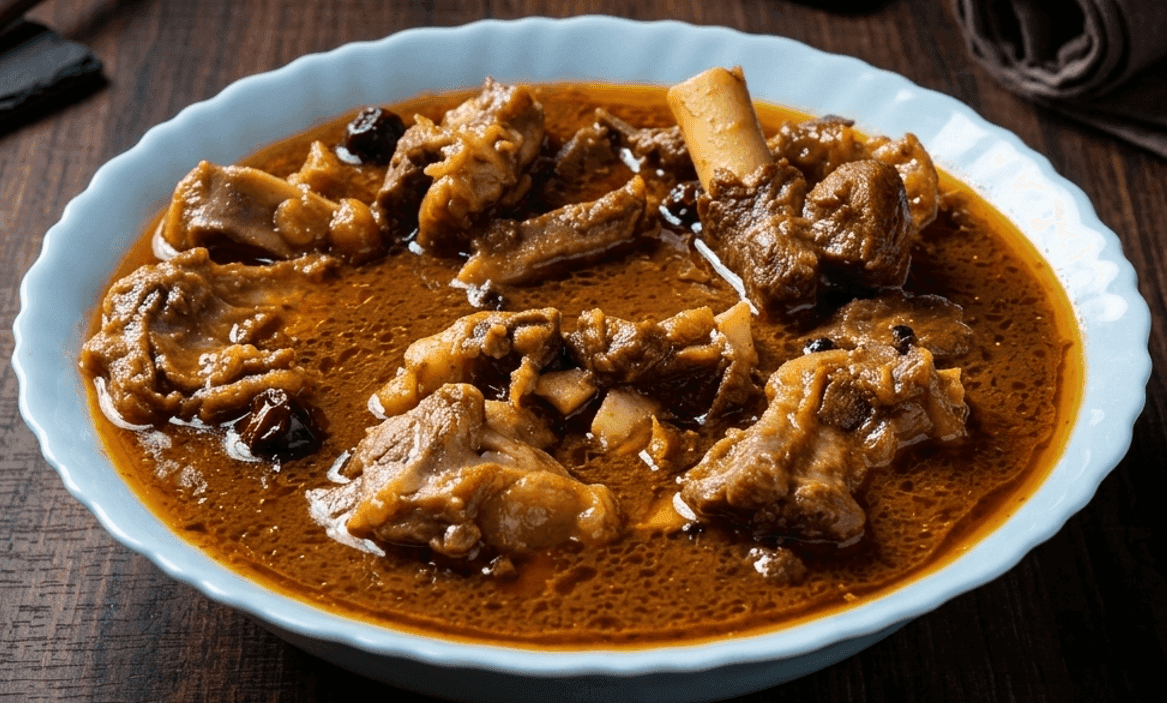
Mutton Kuna Gosht is not just a recipe. It is a cooking tradition that has been passed down in Chiniot, a city in Punjab Pakistan, for generations. The name comes from the Punjabi word kunna which means a round clay pot. Traditionally the meat and spices are sealed inside this pot and buried underground while a fire burns above it for four to six hours. The result is mutton so soft it melts in your mouth, sitting in a thick, earthy gravy unlike anything else in Pakistani cooking.
What makes Kuna Gosht different from other mutton curries is that it uses almost no tomatoes and very few spices compared to dishes like karahi or handi. The flavor comes mostly from the meat itself, the bone marrow, the desi ghee, the slow cooking time, and one very unusual ingredient: roasted wheat flour. The flour is mixed with water into a smooth paste and stirred into the gravy near the end. It thickens the sauce beautifully and gives it a rich, slightly nutty body that no other curry has.
You do not need a clay pot or a fire pit to make a very good version of this at home. A heavy bottomed pot with a tight lid on your stove works very well. The key is patience. Low heat, a sealed lid and enough time for the meat to become truly tender. This recipe follows the method of Ijaz Ansari who keeps the ingredient list clean and the steps honest, just like the traditional cooks of Chiniot have always done.
Why This Recipe Works Better Than Others
Bone In Mutton Is Non Negotiable for the Right Flavor
A lot of home cooks try to make kuna gosht with boneless mutton because it is easier to eat. The result is always a pale, thin tasting version of the real thing. The bones are where the depth of flavor comes from. As the mutton cooks slowly over ninety minutes the bone marrow releases into the gravy and turns it into something incredibly rich and savory. The collagen from the bones also helps the sauce get thick and glossy naturally, even before the wheat flour goes in. Use bone in mutton leg or shank pieces and do not compromise on this.
The Onions Are Not Browned and That Is Intentional
Almost every other Pakistani meat dish asks you to fry the onions until golden brown before adding anything else. Kuna Gosht does the opposite on purpose. The onions go in and are cooked just until soft and translucent, not golden. This is because the dish is not supposed to taste like a bhuna masala. It is supposed to taste mild, mellow and deeply meaty. Golden onions add a caramelized sweetness that dominates. Pale, soft onions dissolve into the gravy quietly and let the mutton be the star. Trust the method even if it feels unusual.
The Meat Is Bhunna'd Before the Water Goes In
After the onions soften the mutton and spices are stirred in and cooked on medium high heat for four to five minutes until the meat changes color and the oil starts to separate from the mixture at the edges of the pot. This step is called bhunna and it is important. It builds a layer of flavor on the surface of each piece of meat and seals in the juices so the mutton stays moist during the long slow cook. Skipping this step and just dumping water in right away produces a boiled, flat tasting gosht instead of a properly developed kuna.
The Wheat Flour Paste Goes In After the Meat Is Already Tender
The roasted wheat flour is the signature ingredient of kuna gosht and the timing of when it goes in matters a lot. It must only be added after the meat is already fully tender. If you add it early the flour sits in the liquid for too long and can go gluey. Added at the right time, after ninety minutes of slow cooking when the meat is falling off the bone, it stirs smoothly into the gravy and gently thickens it over another ten to fifteen minutes on low heat. The result is a sauce with a velvety, almost creamy body that coats each piece of meat perfectly.
Desi Ghee Added at the End Transforms the Aroma
The finishing touch in a proper kuna gosht is a drizzle of warm desi ghee stirred through just before serving. Ghee has a toasted, nutty fragrance that elevates the whole dish at the very last moment. It also gives the gravy a glossy sheen that makes it look as good as it tastes. You can cook the entire dish in oil to save calories but if you add just one tablespoon of ghee at the end you will understand why this dish has been famous in Chiniot for centuries. It is the difference between good and unforgettable.
prep time
20 min
Cook Time
1h 30m
Servings
4
Ingredients
- Bone in mutton750 g
cut into large pieces
- Oil4 tbsp
- Desi ghee1 tbsp
for finishing
- Cumin seeds1 tsp
- Black peppercorns10 pods
Method
Dry Roast the Wheat Flour First
Put a dry pan on medium heat. Add the whole wheat flour with nothing else in the pan.
Stir the flour constantly with a wooden spoon. It will start to change color very slowly. After four to five minutes it should turn a light golden shade and smell nutty and toasty.
Take it off the heat immediately when you smell that toasted aroma. It can burn quickly after this point.
Transfer the roasted flour to a bowl and set it aside. You will use it much later in the recipe, so do not rush this step.
Master Tip:
Roast the wheat flour before you do anything else so it is ready and cooled down when you need it. Hot flour mixed with water can be lumpy and difficult to stir smooth. Letting it cool first makes the slurry much easier to mix.
Heat the Oil and Crackle the Whole Spices
Heat the oil in a heavy bottomed pot or pressure cooker over medium heat.
Add all the whole spices together: cumin seeds, black peppercorns, cloves, green cardamoms, black cardamom, cinnamon stick and bay leaves.
Let them sizzle in the hot oil for thirty to forty five seconds. They should crackle, spit slightly and release a beautiful strong aroma. Stir once or twice so nothing burns on the bottom.
Master Tip:
The oil must be properly hot before the whole spices go in. If the oil is warm but not hot the spices will just sit there and soften instead of blooming. Test by dropping one cumin seed in. If it sizzles right away the oil is ready.
Add Onions and Cook Until Just Soft
Add the thinly sliced onions to the pot with the spices.
Cook on medium heat for eight to ten minutes, stirring regularly, until the onions become completely soft and translucent.
Do not let them go golden or brown. Pull them back if they start to color. For kuna gosht the onions need to be soft and pale, not caramelized.
Add the ginger garlic paste and stir it through. Cook for one minute until the raw smell fades.
Master Tip:
This step feels wrong if you are used to making karahi or handi where you always brown the onions. But for kuna gosht pale onions are correct. They will dissolve completely into the gravy during the long cook and leave behind a mellow sweetness rather than a roasted note.
Add the Mutton and Bhunna on High Heat
Add the mutton pieces to the pot. Stir everything together so the meat is coated with the onion and spice mixture.
Add the red chilli powder, turmeric, coriander powder and salt. Stir well.
Increase the heat to medium high. Cook the mutton in the masala for four to five minutes, stirring every minute or so, until the meat changes color from pink to a grey brown on all sides.
Keep cooking and stirring until you can see the oil starting to separate from the masala and appear around the edges of the pot. This is your sign that the bhunna is done.
Master Tip:
Do not rush the bhunna step by pouring water in early. This four to five minutes of cooking the meat directly in the masala without liquid is what builds the flavor base of the entire dish. If water goes in before the meat has browned properly the kuna will taste boiled rather than cooked.
Add Water and Slow Cook Until the Meat Is Tender
Pour in two cups of water. Stir everything together and scrape up any bits stuck to the bottom of the pot.
Bring the water to a boil, then reduce the heat to low. Cover the pot with a tight fitting lid.
Cook on low heat for seventy five to ninety minutes. Do not open the lid more than once or twice during this time. The steam trappedh inside is what cooks the meat gently and keeps it moist.
After seventy five minutes check the meat. Press the thickest piece with a spoon. It should feel completely soft and offer no resistance. The meat should be pulling away from the bone on its own. If it is not there yet put the lid back on and cook for another fifteen minutes.
If using a pressure cooker cook on high pressure for twenty five minutes then let the pressure release naturally.
Master Tip:
The tight lid is critical. Every time you lift it steam escapes and the cooking time increases. If you are not sure whether there is enough water in the pot tilt the lid slightly and peek without fully removing it. You should see some liquid bubbling gently. If the pot looks dry add another half cup of hot water.
Add the Wheat Flour Slurry and Finish with Ghee
Mix the roasted wheat flour with half a cup of cold water in a bowl. Stir very well until there are no lumps at all. The slurry should be completely smooth and pourable.
Once the mutton is fully tender and the gravy is at a simmer, pour the wheat flour slurry into the pot in a slow steady stream while stirring continuously.
Stir the slurry through the gravy thoroughly. The gravy will start to thicken within a minute or two.
Add the garam masala and stir through. Cook on low heat uncovered for ten to fifteen more minutes, stirring every few minutes, until the gravy is thick, glossy and the flour is fully cooked through with no raw taste.
Turn off the heat and drizzle the desi ghee over the top. Stir it gently through the kuna gosht.
Transfer to a serving bowl, preferably a handi or clay pot if you have one. Garnish with julienned ginger, fresh coriander and lemon wedges. Serve immediately with hot naan.
Master Tip:
If the slurry has any lumps at all strain it through a fine sieve before adding it to the pot. Lumps of flour in kuna gosht are very noticeable and ruin the texture of the gravy. Take the extra thirty seconds to strain it and the result will be a perfectly smooth sauce.
Good Kuna Gosht Cannot Be Hurried and Here Is Why
People try to rush kuna gosht and it never works. They turn up the heat to get the meat tender faster. They open the lid to check every ten minutes. They skip the bhunna and go straight to adding water. Every one of these shortcuts produces a dish that tastes vaguely like mutton stew rather than the real kuna gosht that people drive across Punjab to eat in Chiniot.
The whole point of this dish is time. The original version is buried underground for six hours. Even on the stove ninety minutes on low heat with a sealed lid is not being lazy. It is being correct. The meat goes soft in a way that fast cooking simply cannot replicate. The collagen in the bones has time to melt. The spices have time to deepen. The onions dissolve completely and disappear into the gravy.
Make this on a day when you are not in a hurry. Set it going and do something else for ninety minutes. Come back to a pot that smells like Chiniot. That is the only way to make kuna gosht properly.
Nutritions
Per serving (~ 200g of mutton kuna gosht with gravy)
People Also Ask
Leg and shank cuts with the bone still in are the best choice by far. These cuts have a lot of collagen and connective tissue that breaks down during the long slow cook and turns into a rich, gelatinous stock inside the pot. This is what gives kuna gosht its thick, velvety gravy without needing much additional thickening. Avoid boneless mutton because it cannot produce the same depth of flavor and the gravy will always taste thin. Ribs and shoulder pieces also work if leg and shank are not available.
Yes you can and many home cooks do. After the bhunna step add the water, seal the pressure cooker and cook on high pressure for twenty five to thirty minutes. Let the pressure release naturally before opening. The meat will be completely tender. Then add the wheat flour slurry and garam masala and cook uncovered on low heat for another ten to fifteen minutes to thicken the gravy. The flavor is slightly different from the slow cooked version but it is still very good and it cuts the total cooking time down to under an hour.
Yes, but it does more than just thicken. The roasting step changes the flavor of the flour completely. Raw wheat flour tastes bland and pasty. Roasted wheat flour tastes nutty, slightly caramelized and deeply savory. When it is stirred into the kuna gosht gravy it adds a unique earthy richness that is not found in any other Pakistani curry. It also binds the fat and the liquid together so the gravy does not look oily or separated. This combination of thickening and flavoring is exactly what makes kuna gosht so distinctive.
Store in an airtight container in the fridge for up to three days. The gravy thickens significantly when it cools because of the collagen from the bones and the wheat flour. When reheating add a splash of water to the pot and warm it gently on low heat, stirring occasionally. It will loosen up as it warms. You can also freeze kuna gosht for up to two months. Thaw overnight in the fridge before reheating. Like most slow cooked meat dishes it actually tastes even better the next day after the flavors have had more time to settle together.