
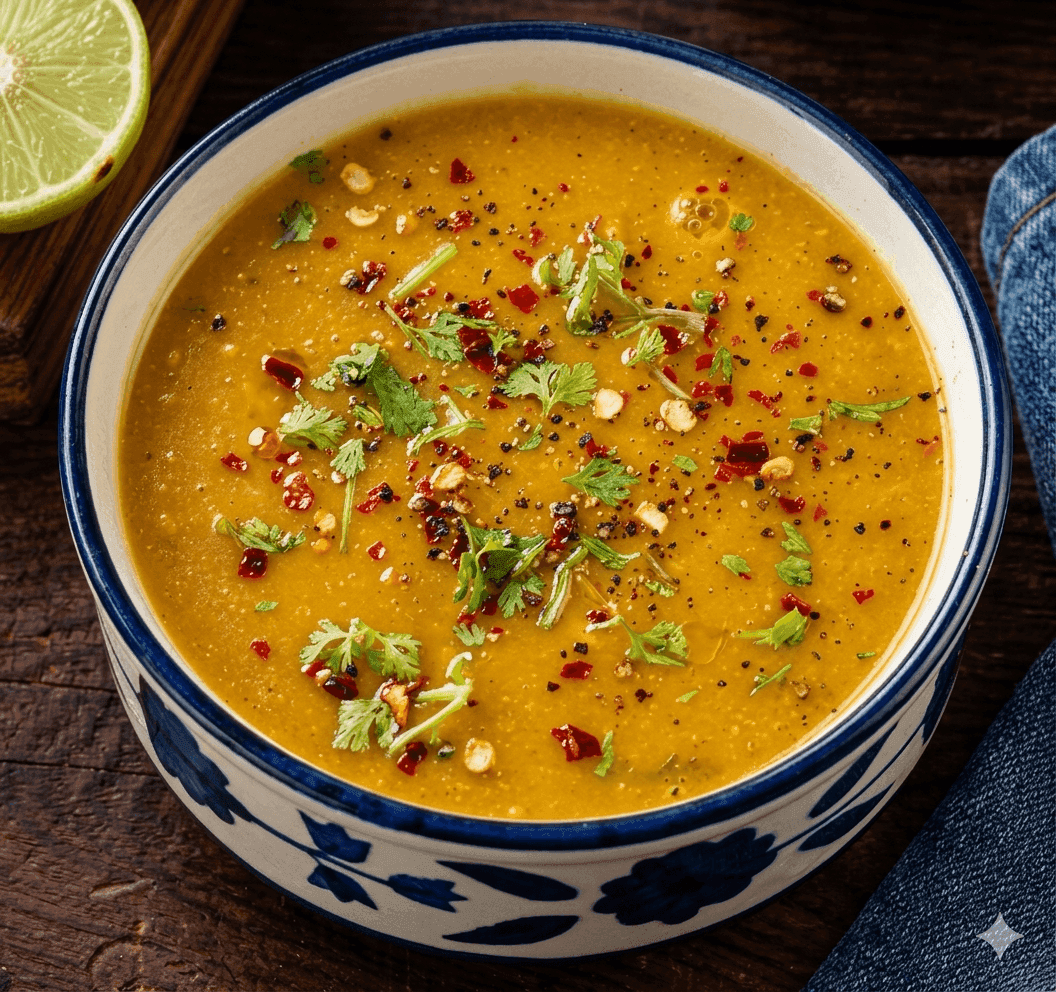
Lentil Dal Soup
Swasthi Shreekanth
Chef
“Swasthi Shreekanth is a celebrated Indian culinary blogger and founder of Swasthi’s Recipes. She is renowned for her meticulously tested, authentic Indian recipes that simplify traditional cooking for millions globally.”

Aarif
Food Journalist
Aarif is a devoted content writer at Regional Heritage Food (RHF), passionate about cooking and travel. He shares his culinary experiences and discoveries, inspiring others to explore new recipes and flavors.
Moong Dal and Toor Dal with Seasonal Vegetables, Aromatic Tempering and Fresh Lemon
There is a type of soup that exists between a dal and a broth. Thicker than water, lighter than a curry, warm enough to revive you on any evening. Dal Soup is one of the oldest and most practical dishes in the South Asian kitchen.
Swasthi Shreekanth presents her Dal Soup recipe as a low-spice, high-nutrition soup that goes easy on the masala. The depth of flavor comes from lemon juice. The lentil and vegetable base provides the body; the ghee-garlic-chilli tempering poured over the blended soup provides the aromatic lift; and the lemon juice added at the end provides the brightness that makes the whole bowl come alive.
Why This Recipe Works Better Than Others
Two Lentils Together Produce a Superior Texture
Swasthi uses a 50/50 mix of moong dal (yellow split mung, which breaks down quickly into a smooth, creamy puree) and toor dal (split pigeon peas, which hold slight body and have a natural earthiness). This combination produces a soup that is simultaneously creamy and slightly substantial. It is not watery like a single lentil soup can be, not overly thick like a pure toor dal would produce.
The Tempering Goes In After Blending, Not Before
Most lentil soups add spices into the pot from the beginning and cook them together with the dal. Swasthi's method cooks the dal and vegetables with only ginger and a touch of turmeric, blends them smooth, then makes the tempering separately in a fresh pan of ghee. The garlic, chilli flakes, cumin powder, and black pepper bloom in the hot fat and are poured into the already-smooth soup. This two-stage approach means the tempering's aromatics are fresh, bright, and un-muted.
Lemon Juice Added Off-Heat Is the Defining Flavour Move
The lemon juice goes in off the heat, not during simmering. Acid added to a simmering liquid immediately converts into steam and its aromatic impact is lost. Added to a slightly cooled soup, it remains fresh, bright, and cuts through the richness of the ghee tempering and lentil fat with precision. This is the 'depth of flavor' Swasthi refers to, it is the acid that makes all the other flavours sharper and more defined.
The Proportions Are Non-Negotiable for the Perfect Balance
Do not alter the proportion of lentils to veggies. Too many veggies or too many lentils will change the taste of your dal soup. The half-cup of lentils to roughly 1.5 cups of mixed vegetables to 3 cups of water is the calibrated ratio that produces a soup of the right thickness, flavour intensity, and nutritional balance. More lentils makes the soup dense and starchy; more vegetables makes it watery and vegetable-forward rather than dal-forward.
prep time
10 min
cook time
20 min
blend time
5 min
servings
3
Ingredients
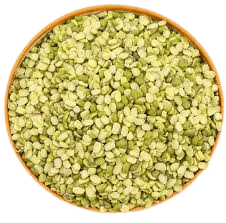 Moong dal0.25 cup
yellow split mung lentils
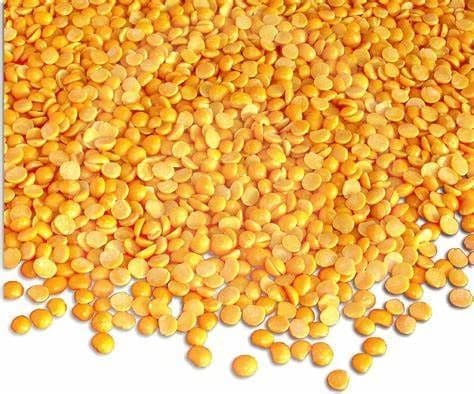 Toor dal0.25 cup
split pigeon peas OR masoor dal (red lentils)
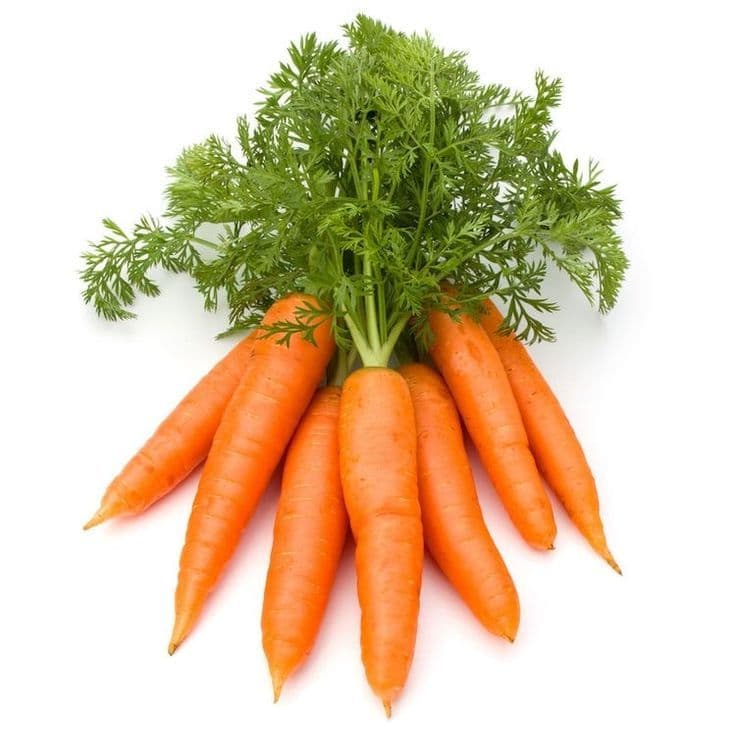 Carrot0.3 cup
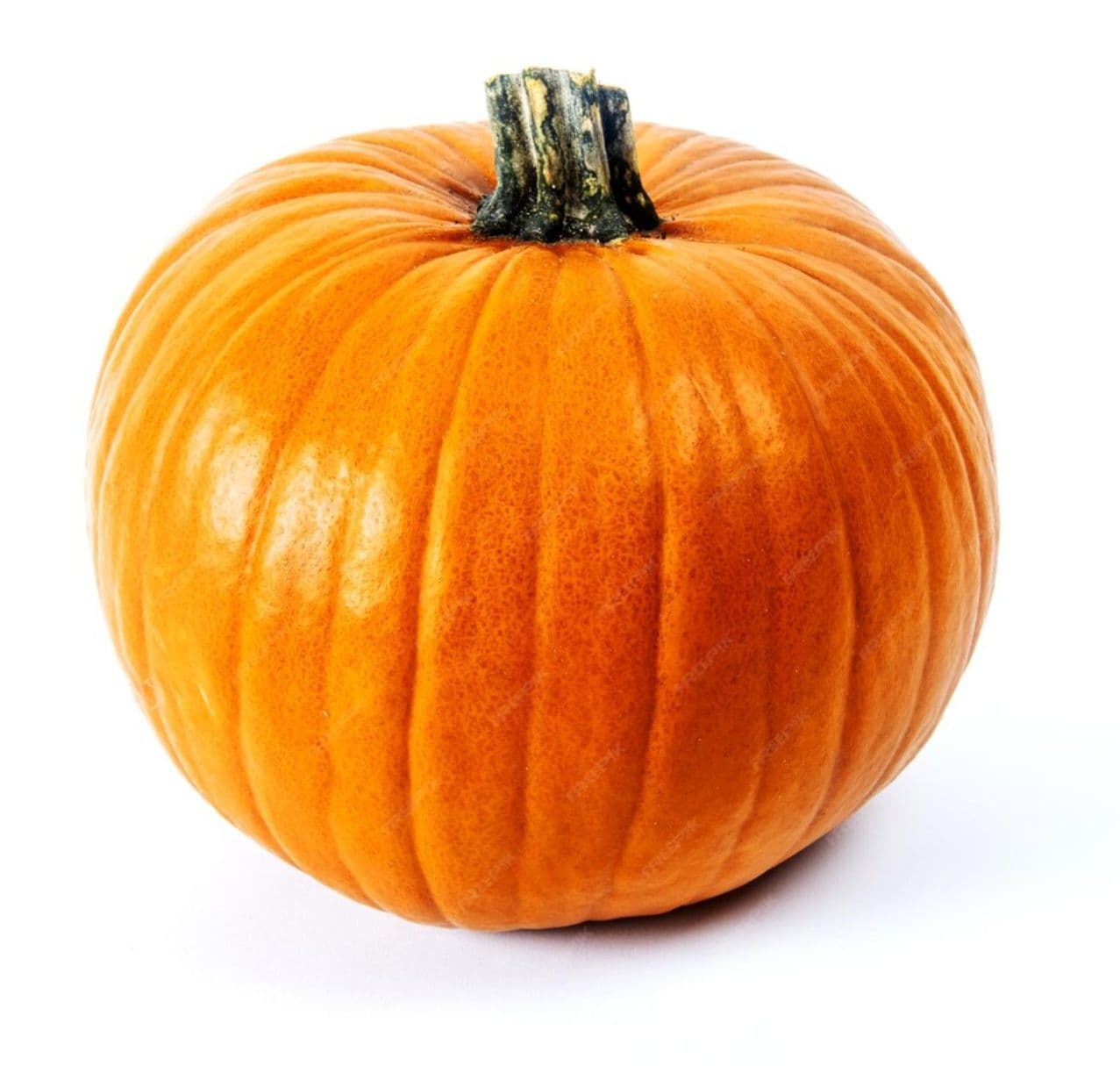 Pumpkin0.6 cup
 Tomatoes0.33 cup
Method
Rinse the Lentils and Dice the Vegetables
Add the moong dal and toor dal (or masoor dal) to a colander and rinse well under cold running water two or three times until the water runs almost clear.
Drain completely and set aside.
Grate the ginger finely, do not chop it; grating disperses the ginger flavour more evenly through the liquid.
Dice the carrot, pumpkin, tomato, and zucchini (if using) into roughly 1cm cubes, uniform sizing ensures everything cooks through in the same time.
Finely chop the coriander leaves for garnish and keep spices measured and ready.
Chef's Tip:
Rinsing the lentils thoroughly removes the surface starch that causes foam during cooking and makes the finished soup slightly cloudy. Two thorough rinses until the water running off is clear or nearly clear. Do not skip rinsing and proceed directly to cooking with unwashed dal.
Sauté Ginger and Add Vegetables and Lentils
Add 1 tablespoon of ghee or butter to a pressure cooker, soup pot, or Instant Pot insert and heat over medium.
Reduce heat to low and add the grated ginger.
Sauté for 30 seconds without letting it brown or burn.
Add the diced carrots, pumpkin, tomatoes, and zucchini along with 1/8 teaspoon of turmeric.
Stir once to combine.
Add the rinsed and drained lentils.
Pour in 3 cups of water or vegetable broth along with 3/4 teaspoon of salt. Stir gently to combine.
Chef's Tip:
Sauté the ginger on low heat, not medium or high. Ginger burns very quickly on its own without another ingredient to moderate the temperature. Burnt ginger imparts a bitter note to the entire dish that no amount of additional seasoning can correct. Thirty seconds on low heat is sufficient to release the ginger's aromatic oils without any risk of burning
Cook the Dal and Vegetables Until Tender
Pressure cooker method:
Close the lid and cook for 3-4 whistles on medium flame.
Allow the pressure to drop naturally before opening.
Stovetop pot method:
Bring to a boil, then reduce to medium heat, cover, and simmer for 30-40 minutes, stirring occasionally, until both the lentils and vegetables are completely soft and breaking apart.
Instant Pot method:
Secure the lid and pressure cook on HIGH pressure for 12 minutes.
Let the pressure release naturally.
In all methods, the lentils and vegetables should be completely tender. They should mash easily when pressed with a spoon. If any resistance remains, continue cooking.
Chef's Tip:
Natural pressure release is important for lentil soups. Quick release releases a rush of starchy steam that can cause the soup to foam up through the valve, creating a mess and potential staining. Natural release for 10-15 minutes before opening eliminates this risk completely. If using a stovetop pressure cooker and you hear uneven whistling, lower the flame, uneven whistling indicates the pressure is fluctuating and the dal may cook unevenly.
Cool Slightly and Blend
Once the pressure has fully released or the pot has finished simmering, allow the contents to cool for 10-15 minutes.
Do not blend boiling hot liquid, the steam inside the blender creates pressure that can blow the lid off and cause burns.
Transfer the cooled soup in batches to a stand blender, or use an immersion (stick) blender directly in the pot.
Blend to a smooth, creamy puree or blend to a coarser texture if you prefer some pieces visible in the soup.
Return the blended soup to the pot.
Chef's Tip:
If using a stand blender, fill it no more than halfway with each batch to allow room for steam expansion. Hold the lid firmly with a folded kitchen cloth, never with a bare hand. For the smoothest result possible, blend in a powerful blender for 60 seconds per batch, not 15-20 seconds. The difference in smoothness between a 20-second blend and a 60-second blend is significant and affects the final texture of every spoonful.
Make the Garlic-Chilli Tempering (Tadka)
Add 1 tablespoon of ghee or butter to a small tadka pan or frying pan and heat on medium.
Add the finely chopped garlic and sauté for 30-45 seconds until it becomes fragrant and just begins to turn light golden, do not let it brown.
Reduce the heat to low. Add 1/2 to 3/4 teaspoon red chilli flakes, 3/4 to 1 teaspoon cumin powder, and 1/2 teaspoon crushed black pepper.
Stir and sauté for exactly 1 minute. The spices will sizzle in the hot ghee, turn fragrant, and deepen slightly in colour.
Remove from heat immediately after 1 minute.
Chef's Tip:
The garlic must reach light golden before the chilli flakes are added. Raw garlic in the finished tempering tastes sharp and acrid rather than mellow and fragrant. But the transition from light golden to burnt happens in 10-15 seconds, so watch carefully. The moment the garlic starts to smell sweet and nutty, add the chilli flakes and spices and time exactly one minute from that point.
Combine, Adjust Consistency, Simmer Briefly
Pour the hot tempering directly into the blended dal soup. Stir well to combine.
Return the pot to medium-low heat. If the soup is too thick add the remaining half cup of water, vegetable broth, or coconut milk and stir to incorporate.
Bring the soup to a gentle simmer for 2-3 minutes, stirring once or twice, until it is uniformly heated through and the tempering flavours have distributed through the soup.
Turn off the heat.
Chef's Tip:
Adjust consistency before the final simmer, not after. The soup thickens slightly as it simmers and continues to thicken as it cools. If you prefer a thinner soup than the recipe produces, add the extra liquid now; if you want it thicker, simmer uncovered for an extra 3-4 minutes to evaporate some liquid. The target consistency is a smooth, flowing soup that coats the back of a spoon lightly — thicker than a broth, thinner than a gravy.
Add Lemon Juice and Serve
Allow the soup to cool for 2-3 minutes after turning off the heat. Then add 2 tablespoons of fresh lemon juice. Stir well.
Taste and adjust salt if needed. The lemon juice will make the salt already present taste more pronounced, so taste before adding more.
Ladle into individual bowls.
Garnish with 2 tablespoons of freshly chopped coriander leaves, a light dusting of red chilli flakes, and a grinding of black pepper.
Serve warm with crusty bread, roti, quinoa, millets, or paratha.
Chef's Tip:
Add the lemon juice only after the heat is turned off and the soup has cooled slightly. Lemon juice added to boiling liquid immediately converts its volatile aromatic compounds into steam and their flavour impact is largely lost. The same lemon juice added to a 70-75 degree soup stays bright and fresh and transforms the flavour of the entire bowl. This is the single most important technique note in the recipe.
Master Tip: The Separate Tempering Poured Over Blended Soup.
Making the garlic-chilli-cumin tempering separately after blending, and then pouring it over the smooth soup, is the technique that gives this dal soup its restaurant-quality finish. When spices are cooked into a liquid from the beginning, they dissolve and homogenise , they are present but invisible.
When a fresh tempering of ghee-bloomed spices is poured over the finished soup, the aromatics are still volatile, still raw at the surface, and they announce themselves with a fragrance that rises off the bowl before the spoon has even been lifted. The contrast between the smooth, subtle soup base and the punchy, aromatic tempering floating on top is the experience of a bowl of good dal soup.
Nutritions
Per Bowl with Ghee (~300ml)
People Also Ask
Yes. Masoor dal (red lentils) is Swasthi's stated substitute and works well. Red lentils break down faster and more completely than toor dal, producing an even smoother, silkier soup. The flavour is slightly sweeter and less earthy than the moong-toor combination. If using only masoor dal, reduce the pressure cook time to 2 whistles (or 8-10 minutes Instant Pot high pressure) as masoor cooks faster than toor dal. The total quantity remains the same: half a cup of dal total.
Swasthi provides a comprehensive list of options: butternut squash, bottle gourd, corn kernels, spinach, fenugreek leaves, kale, pea shoots, and mustard greens all work well. For leafy greens, she recommends sautéing them separately in butter until wilted and adding them to the finished blended soup rather than cooking them in the pressure cooker, which would overcook the leaves. The core principle is to maintain the proportion of roughly 1.5 cups of total vegetables to half a cup of lentils.
Dal soups always thicken as they cool, this is normal and expected. To thin the soup, add warm water or vegetable broth a quarter cup at a time, stirring after each addition, until the desired consistency is reached. Heat briefly on low after adding liquid. Do not add cold water to a hot soup as the temperature drop can cause the blended soup to become slightly grainy. Swasthi specifically notes you can also add coconut milk for a richer, creamier consistency, it thins the soup while adding body and a subtle sweetness.
This recipe was originally developed by Swasthi as a moong dal soup for babies and toddlers. For young children: omit the chilli flakes entirely, reduce the black pepper to a pinch, use only a tiny amount of ginger (1/4 tsp), and skip the salt or use a minimal amount. Moong dal alone (without toor dal) is gentler on young digestive systems. Blend until completely smooth and ensure no vegetable chunks remain. For elderly individuals or those with digestive sensitivity, using ghee rather than oil and reducing the chilli to the minimum produces a warming, easily digestible soup appropriate for all ages.