
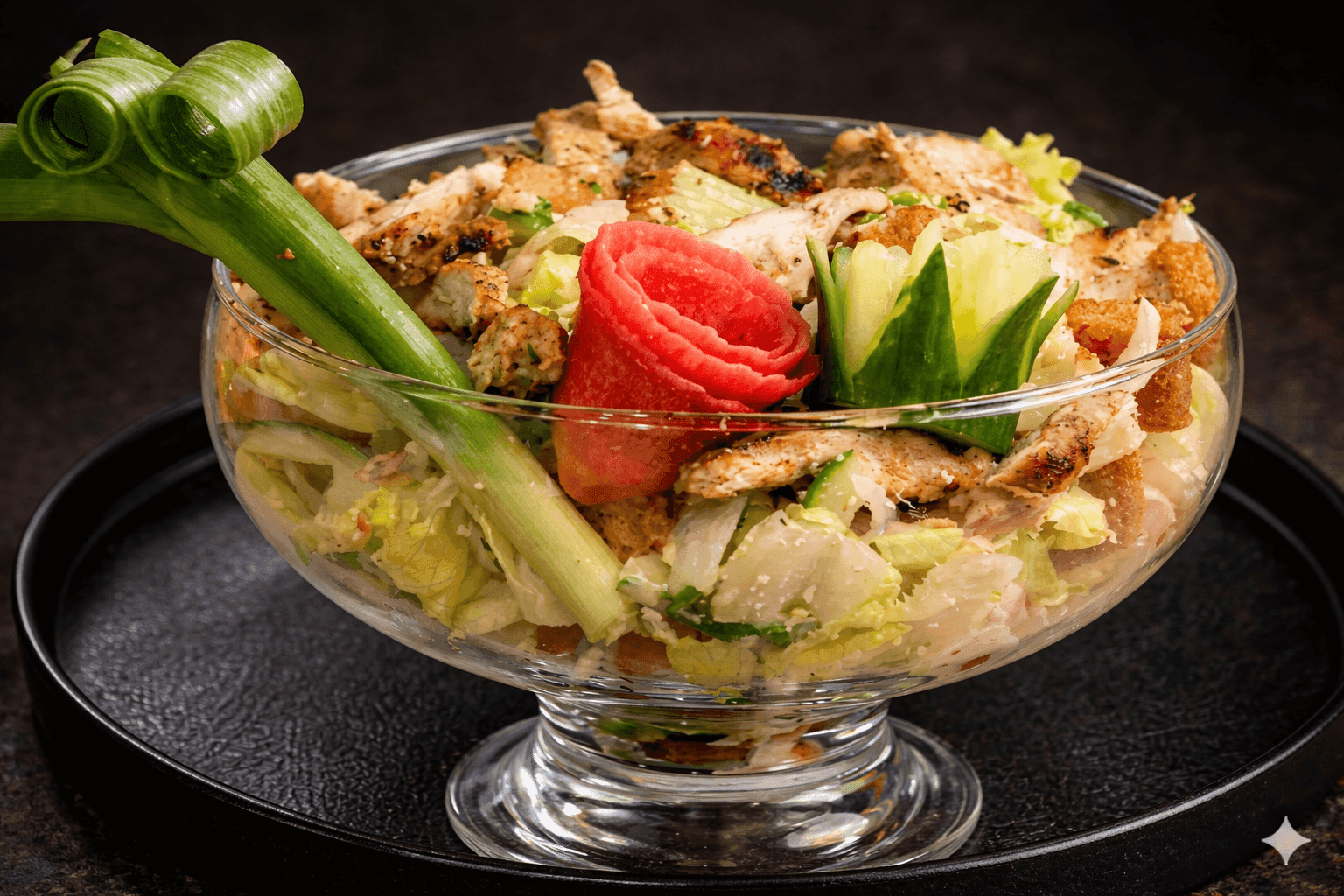
Caesar Salad

Shireen Anwar
Chef
“Chef Shireen Anwar is a legendary Pakistani culinary icon and long-time host of Masala Mornings on Hum Masala. With over 30 years of experience, her motherly teaching style and meticulous recipes have made her a household name for millions worldwide.”

Aarif
Food Journalist
Aarif is a devoted content writer at Regional Heritage Food (RHF), passionate about cooking and travel. He shares his culinary experiences and discoveries, inspiring others to explore new recipes and flavors.
Crisp Romaine, Golden Croutons & Silky Homemade Dressing | Continental Ceaser Salad
Of all the salads that have crossed from Western tables to Pakistani dining rooms, Caesar Salad has made the most successful journey. It appears on every continental restaurant menu in Karachi, Lahore, and Islamabad. It is served at hotel brunches, ordered at cafes, and requested at home dawats.
Chef Shireen Anwar, with over 35 years of professional culinary experience and one of the most trusted voices in Pakistani home cooking, brings that restaurant quality directly into the home kitchen.
The dressing uses mayonnaise as the base, a smart, accessible substitution for raw egg yolks that produces an equally silky, equally rich result without the food safety concerns or the technical difficulty of emulsifying from scratch. The croutons are made from bread cubed and baked in garlic-infused butter, reliable, and dramatically better than anything from a packet. And the final assembly is as elegant as it is effortless.
Why This Recipe Works Better Than Others
No Unnecessary Steps
Chef Shireen Anwar has spent three decades teaching Pakistani home cooks continental techniques without the intimidation of professional kitchen complexity. Her Caesar Salad eliminates the fussy elements, no raw egg emulsification, no anchovy paste hunting (she provides alternatives), no complicated tableside theatre while preserving every flavour element that makes the dish great.
Mayonnaise-Based Dressing
Traditional Caesar dressing uses raw egg yolks emulsified with olive oil, a technically precise process that requires the right temperature, the right speed, and carries a small food safety risk. Shireen Anwar's version uses good quality mayonnaise as the base, which is a fully emulsified, stable, food-safe product that produces an equally thick, creamy, luxurious dressing with a fraction of the effort. When combined with fresh lemon juice, garlic, Worcestershire sauce, Dijon mustard, and Parmesan, the result is indistinguishable from the traditional version in richness and depth.
Homemade Garlic Butter Croutons
The croutons make or break a Caesar Salad. Store-bought croutons are dry, flavourless, and turn soggy within minutes of hitting the dressing. Homemade croutons cubed bread tossed in garlic-infused butter, baked until deeply golden and crisp are a completely different experience. They hold their crunch through the dressing, they carry a warm garlic flavour that echoes throughout the salad, and their irregular craggy edges trap and hold the creamy dressing in every bite.
Dried Lettuce
Wet romaine lettuce is the single most common reason a Caesar Salad fails at home. Water-coated lettuce repels dressing, the dressing slides off into a puddle at the bottom of the bowl rather than coating each leaf. Shireen Anwar's method specifies washing the romaine and drying it thoroughly either in a salad spinner or by patting gently with clean kitchen paper before the salad is assembled. This step takes two minutes and is the difference between a dressed Caesar Salad and a soggy, underdressed one.
Prep Time
20 min
Crouton Time
15 min
Chill Time
15 min
Total Time
40 min
servings
3
Ingredients
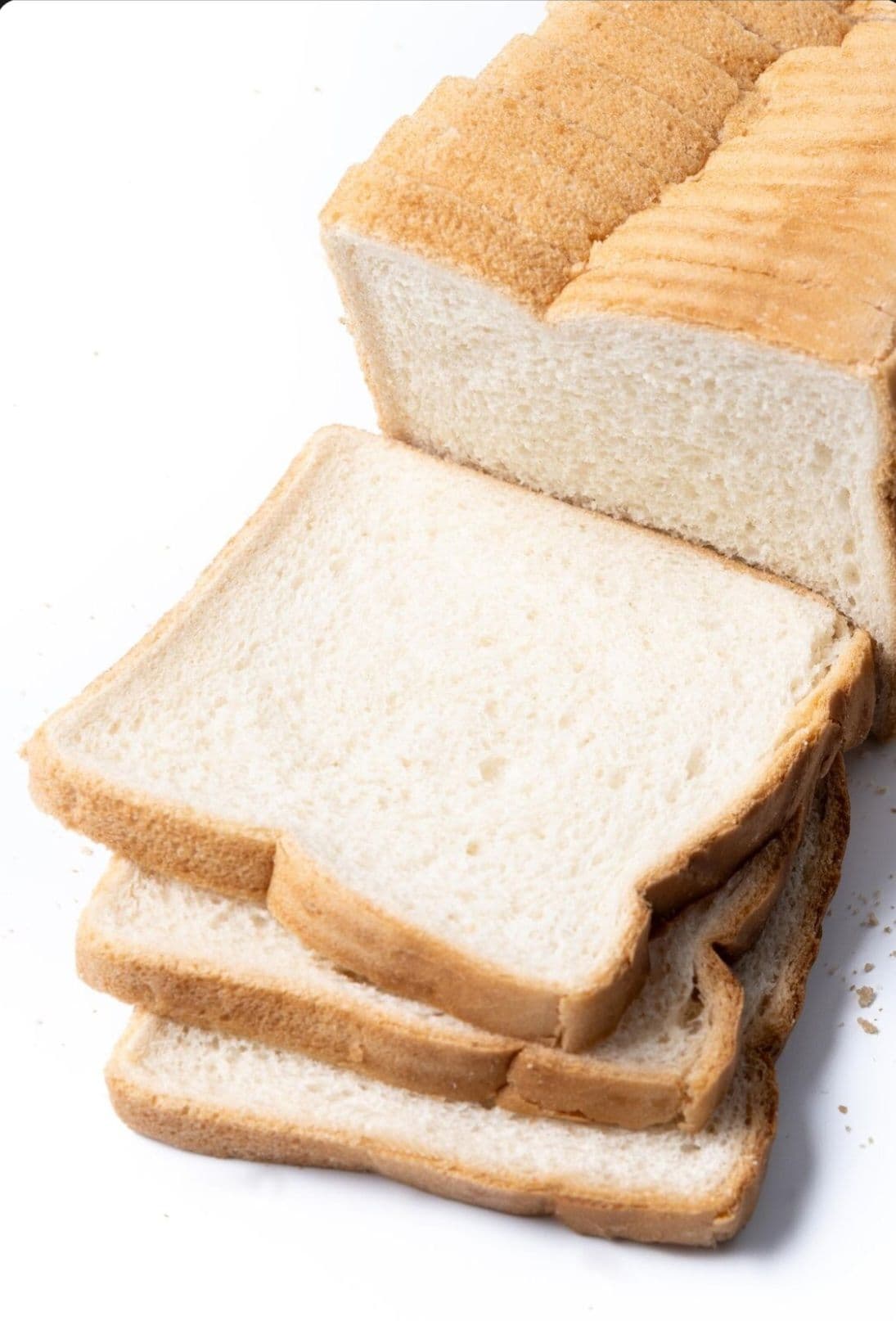 White bread4 loves
 Butter2 tbsp
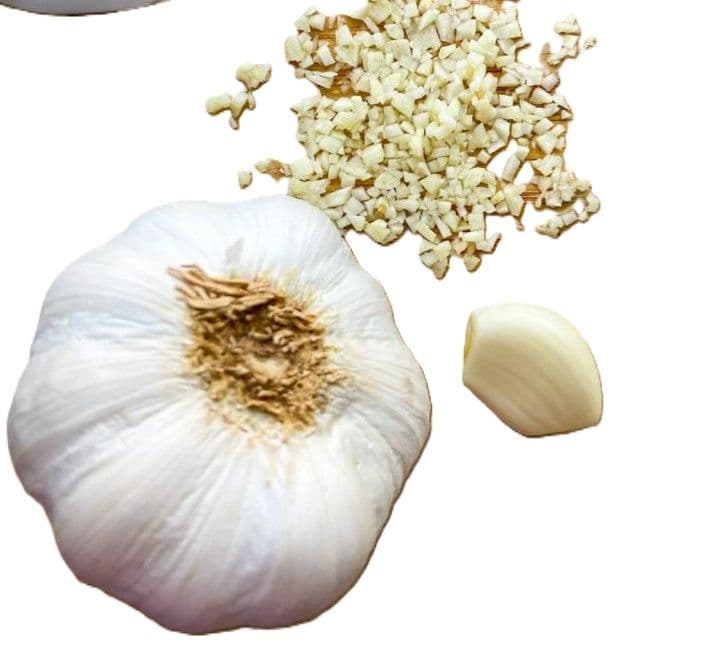 Garlic4 cloves
 Olive oil4 tbsp
 Salt0.25 tsp
Method
PREPARE THE BREAD
Cut the bread into even 1.5 to 2 cm cubes or for a more rustic texture, tear the bread into rough pieces by hand.
Irregular torn pieces create craggy edges that crisp more dramatically in the oven and trap more dressing.
If using day-old bread, it is ready as is. If using fresh bread, spread the cubes on a tray and leave uncovered for 20–30 minutes to dry out slightly before baking.
Chef Tip:
Day-old bread makes the best croutons because it has already lost excess moisture. Fresh bread takes longer to crisp and can turn chewy in the centre. If you only have fresh bread, the 20-minute drying step on the counter is an essential shortcut that replicates the effect of day-old bread.
INFUSE THE BUTTER WITH GARLIC
Melt 2 tbsp of butter in a small pan over low heat. Add 2 minced garlic cloves and cook gently for 1–2 minutes, stirring, until the garlic is fragrant and just beginning to turn golden not browned or burned.
Remove from heat and stir in 1 tbsp of olive oil. This garlic-butter mixture is your crouton coating. If you prefer, you can skip this step and simply toss the bread with garlic powder mixed into the oil and butter but the fresh garlic method produces a deeper, more rounded flavour.
Chef Tip:
Cook the garlic in butter over low heat not medium or high. Garlic burns in seconds at high heat and turns bitter instantly. The goal is fragrant and golden, not browned. If you see any browning, immediately remove from heat and proceed.
BAKE THE CROUTONS
Preheat your oven to 180°C (350°F). Place the bread cubes in a large mixing bowl. Pour the garlic butter mixture over the bread and toss thoroughly to coat every piece.
Sprinkle with ¼ tsp salt, ¼ tsp black pepper, and dried herbs if using. Toss again.
Spread in a single, even layer on a baking tray lined with parchment. Bake for 12–18 minutes, turning once halfway through, until the croutons are deep golden-brown and completely crisp throughout.
Allow to cool completely on the tray before using they crisp further as they cool.
Chef Tip:
Do not crowd the croutons on the tray. Overlapping pieces steam each other rather than bake, producing soft croutons instead of crispy ones. Use two trays if needed. A single layer with space between pieces is non-negotiable for properly crunchy croutons.
BUILD THE DRESSING BASE
In a medium bowl, combine ½ cup mayonnaise, 2 tbsp fresh lemon juice, 2 cloves of finely minced or grated garlic, 1 tsp Worcestershire sauce, and 1 tsp Dijon mustard.
Whisk vigorously until completely smooth and uniform approximately 1 minute.
The mustard helps emulsify the mixture and the lemon juice will thin the mayonnaise slightly into a pourable consistency.
Chef Tip:
Grate the garlic on a fine microplane rather than mincing with a knife if possible. Grated garlic almost dissolves into the dressing, eliminating any risk of raw garlic chunks that can be sharp and overpowering in individual bites. If you only have a knife, mince as finely as possible and then press the flat of the knife over the mince repeatedly to create a near-paste.
ADD PARMESAN, OIL & SEASON
Add 3 tbsp of finely grated fresh Parmesan cheese to the dressing and stir well to incorporate.
Drizzle in 2 tbsp of olive oil while whisking continuously the oil enriches the dressing and loosens it to the right coating consistency.
Season with ¼ tsp salt and ½ tsp freshly ground black pepper.
Taste and adjust the dressing should be tangy from the lemon, savoury from the Worcestershire and Parmesan, with a creamy body and a present but not overwhelming garlic note.
If too thick, add 1 tbsp of water. If too thin, add 1 tbsp more mayonnaise.
Chef Tip:
Always taste the dressing before it goes on the salad. Caesar dressing is a balancing act, too much lemon and it is sharp, too little and it is flat. Too much garlic and it overwhelms, too little and the dressing lacks character. Season, taste, and adjust before proceeding to assembly. The dressing can be refrigerated for up to 5 days the flavour improves with 30 minutes of resting.
WASH & DRY THE ROMAINE
Separate the romaine lettuce leaves. Discard any outer leaves that are damaged or wilted. Wash under cold running water, paying attention to the base of the leaves where soil can collect.
Transfer to a salad spinner and spin vigorously until completely dry or lay the leaves on clean kitchen paper and pat gently.
The lettuce must be completely dry before dressing. Tear or cut into 3–4 cm pieces. If the inner heart leaves are small and tender, leave them whole for a more elegant presentation.
Refrigerate the prepared lettuce for 10–15 minutes to ensure it is cold and crisp before dressing.
Chef Tip:
Romaine lettuce can be washed and refrigerated (in a sealed container with a paper towel to absorb any remaining moisture) up to 24 hours before the salad is served. Thoroughly dried and cold lettuce stays crisper far longer than room-temperature wet lettuce. This is a genuine time-saving prep tip for dinner parties.
SHAVE THE PARMESAN
Using a vegetable peeler, run the peeler firmly along the edge of a block of Parmesan to create thin, elegant shavings.
These go both into the salad during tossing and on top as a visible garnish. If you only have pre-grated Parmesan, it works for the dressing but the visual impact of the shavings on top is worth seeking out a block.
A block of Parmesan from any major supermarket or grocery store is all that is needed.
Chef Tip:
Always buy a block of Parmesan rather than pre-grated for this recipe if possible. Pre-grated Parmesan often contains anti-caking agents (cornstarch or cellulose) that prevent it from melting smoothly into the dressing and give it a slightly powdery texture. Fresh-grated Parmesan integrates silkily and has a far more pronounced nutty, complex flavour.
DRESS, TOSS & PLATE
Place the dried, cold romaine in a large salad bowl. Add approximately two-thirds of the Caesar dressing and toss gently using tongs or two large spoons, lift the lettuce from the bottom and fold it over to coat evenly.
Do not pour all the dressing at once, over-dressed Caesar Salad is a common mistake.
Add more dressing gradually until every leaf is lightly coated but not drowning.
Add half the croutons and half the Parmesan shavings and toss once more.
Transfer to a serving platter or individual plates. Scatter the remaining croutons and Parmesan shavings on top.
Finish with several grinds of fresh black pepper. Serve immediately.
Chef Tip:
Always serve Caesar Salad immediately after dressing and within 5 minutes is ideal. The croutons begin absorbing the dressing and softening within minutes, and the lettuce begins to wilt within 15 minutes. If preparing for a group, keep all components separate dressed bowl, croutons in a separate container, Parmesan shavings ready and assemble at the table just before serving for maximum crunch and freshness.
Secret Ingredient: Worcestershire Sauce
Worcestershire sauce is a fermented condiment containing tamarind, anchovies, molasses, vinegar, onion, and spices. In a Caesar dressing, it provides a deep, complex umami note savoury, slightly sweet, slightly sharp which is impossible to replicate with any other single ingredient. Without it, the dressing tastes like garlic mayonnaise. With it, the dressing tastes like Caesar. Even one teaspoon transforms the entire flavour profile. Note that Worcestershire sauce contains anchovies, this is also where the traditional Caesar dressing's anchovy flavour comes from when the sauce is used. For a vegetarian version, use Henderson's Relish, which is Worcestershire without anchovies
Nutritions
Per Serving (~190g)
People Also Ask
Croutons are small cubes of bread, typically day-old white or sourdough. They have been tossed in olive oil, garlic, herbs and seasoning, then baked or pan-fried until they are deeply golden, crunchy, and crisp all the way through. In a Caesar salad, they are not just a garnish, they are a core structural element of the dish. They provide the essential crunch against the silky dressing.
Worcestershire sauce is the hardest ingredient in this recipe to substitute because its flavour is uniquely complex. The best substitute for a similar umami depth is a combination of ½ tsp soy sauce, ½ tsp tamarind paste, and a pinch of sugar. It will not be identical but provides a comparable savoury-tangy note. Another option is to use 1 tsp of fish sauce, which provides the anchovy umami of the original. For a completely different but still delicious approach, replace with 1 tbsp of balsamic vinegar, the result will be sweeter and tangier rather than savoury-deep, but still very good.
Yes, iceberg is actually the second most traditional choice for Caesar Salad and has some advantages. Its water content is even higher than romaine, which means it stays colder longer at the table and provides an extra-crisp, refreshing crunch. Its flavour is milder and slightly sweeter than romaine. The main trade-off is that iceberg does not hold dressing as well as romaine because its leaves are smoother and more tightly packed. If using iceberg, tear rather than cut and make sure it is very thoroughly dried before dressing.
Soft croutons have one of three causes. First, the bread was too fresh and moist, day-old bread or bread left to dry on the counter produces much crisper results. Second, the croutons were crowded on the baking tray, overlapping pieces steam each other rather than bake. Third, they may not have baked long enough, properly crisped croutons should feel completely dry and hard throughout when squeezed lightly, not just on the surface. To rescue soft croutons, return them to the oven at 180°C for 5 more minutes. Store cooled croutons in an airtight container at room temperature for up to 3 days, never in the refrigerator, which creates humidity that softens them.
You can, and the salad will still be good. However, homemade Caesar dressing takes literally 4 minutes to make and the difference in quality is dramatic and more fresh, more garlicky, more tangy, and without the preservatives and stabilisers that give commercial dressings a slightly processed aftertaste. If time is a genuine constraint, choose a high-quality commercial Caesar dressing and focus your effort on making the homemade croutons instead, which make a proportionally larger difference to the overall dish.