
Mutton Kaleji Masala

shan e Dili
Chef
“Shan e Dilli is the cooking channel of Nagina Abbas, a Delhi-based food creator specializing in authentic North Indian and Delhi-style homemade recipes. Her expertise lies in traditional Mughlai, biryani, kebabs, and street food, with a philosophy that "homemade is happiness," making easy, tasty recipes accessible to home cooks.”

Aarif
Food Journalist
Aarif is a devoted content writer at Regional Heritage Food (RHF), passionate about cooking and travel. He shares his culinary experiences and discoveries, inspiring others to explore new recipes and flavors.
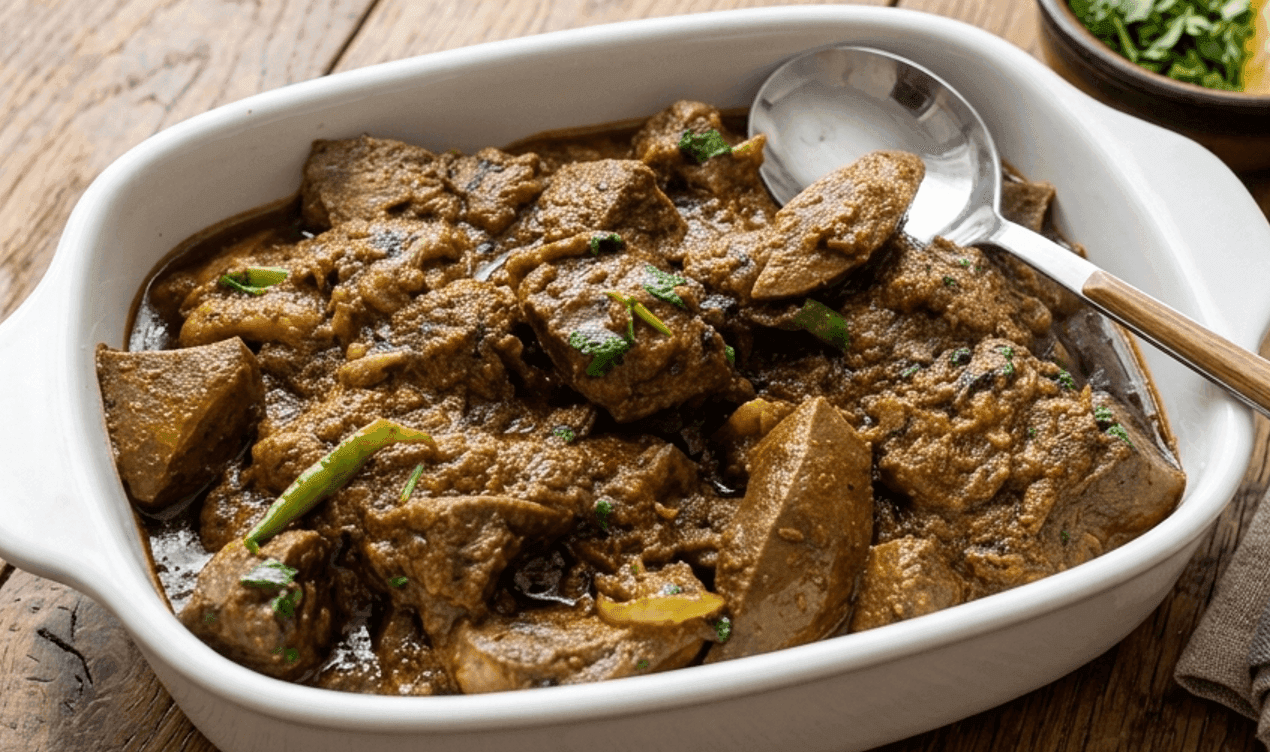
A Traditional Food Street Classic: Tender Mutton Kaleji(Liver) Slow-Cooked In A Tangy Spice Base With A Fresh Coriander And Green Chili Punch
There are dishes that belong to a moment, and kaleji belongs to Bakra Eid morning the way nothing else does. Before the biryani is assembled, before the korma goes on, before the paya pot even comes out of the cupboard, the kaleji is already on the tawa or in the kadai. It is the first meat dish of the Eid. The one that comes out of the kitchen while the household is still settling, while the guests are still arriving, while the children are still in their new clothes and the courtyard still smells of the morning air. Kaleji masala on Eid morning is not just breakfast. It is the announcement that the day has truly begun.
Kaleji, the liver of mutton or beef, has been eaten on the subcontinent for as long as animals have been slaughtered for food. It is one of the oldest dishes in the culinary tradition of the region, predating most of the masala-based curries that now define Pakistani and Indian cooking. In the old kitchens of Delhi, Lucknow, and Lahore, the liver was considered the most prized part of the animal, cooked immediately after slaughter when it was at its freshest and most flavourful. The Mughal courts prepared it with elaborate spice blends. The dhabas of the grand trunk road cooked it simply with onion, ginger, and chilli. Every region developed its own version, but the principle was always the same: cook it fast, keep it soft, finish it bold.
Why You Should Add Kaleji to Your Regular Diet Once or Twice a Week
Nutritionists describe mutton and beef liver as one of the most nutrient-dense foods on the planet, and the science supports that description without qualification.
A single 100-gram serving of mutton liver contains approximately 15 milligrams of iron in the highly absorbable heme form, covering up to 80 percent of the average adult's daily iron requirement in a single meal.
The vitamin B12 content of mutton liver is extraordinary: a 100-gram serving contains up to 70 micrograms, against a daily requirement of 2.4 micrograms. B12 is essential for red blood cell formation, nerve health, brain function, and sustained energy levels.
Nutritionists recommend a serving of 75 to 100 grams once or twice a week as the optimal frequency: enough to deliver a significant portion of your weekly iron, B12, and vitamin needs without the risk of Vitamin A overconsumption that comes with daily liver eating.
For children above five years, adolescents, pregnant women who have received clearance from their doctor, active adults, and anyone managing low iron or low energy, a weekly kaleji masala is not indulgence. It is medicine.
Why This Recipe Works Better Than Others
Cleaning the Kaleji with Vinegar and Salt Removes the Strong Smell
The single biggest reason people avoid cooking kaleji at home is the smell. Raw liver has a strong, metallic, iron-rich odour that many people find unpleasant, and that odour can carry through into the finished dish if the cleaning step is skipped or rushed. This recipe uses a mixture of vinegar and salt to soak and clean the liver pieces before any cooking begins. After soaking for ten minutes, the pieces are washed under cold running water until the water runs completely clear. The result is a kaleji that smells neutral and clean before it hits the pan, and a finished dish where the masala aromatics are front and centre rather than fighting with the liver smell.
The Liver Is Added to a Fully Cooked Masala, Not a Half-Cooked One
The masala in this recipe is cooked to completion before the kaleji is added. The onions are fried to a deep golden colour. The ginger garlic paste is cooked until the raw smell is gone. The tomatoes are added and cooked until they completely break down and the oil separates from the masala. Only at this point does the liver go in. This sequence is critical because liver cooks very quickly. If it is added to an undercooked masala, the liver finishes cooking before the masala does, and by the time the tomatoes and onions have cooked through, the liver is overcooked, hard, and rubbery.
The Liver Is Cooked Without a Lid to Prevent Toughening
Many recipes cover the liver during cooking to speed things up. This recipe keeps the pan open throughout the cooking of the liver itself. Covering the pan traps steam, which raises the temperature inside and causes the proteins in the liver to tighten rapidly, producing the rubbery, chewy texture that makes people dislike kaleji.
Yogurt Is Added After the Liver Has Changed Colour
The yogurt in this recipe does not go in with the raw liver. It goes in after the liver pieces have changed colour and the surface is cooked, which takes about three minutes of stirring on medium-high heat. Adding yogurt at this point does two things. It enriches the masala and gives it a slight tang that balances the earthiness of the liver. And it provides a small amount of additional moisture that helps the liver finish cooking gently in the final few minutes rather than continuing to fry hard against the pan.
Cleaning Time
10 min
Prep Time
10 min
Cook Time
30 min
servings
4
Ingredients
- Kaleji (Liver)500 g
cut into medium-sized boti pieces, 1.5 inch
- White vinegar2 tbsp
- Salt1.5 tsp
1 tsp for cleaning and 0.5 tsp during cooking
- Oil4 tbsp
- Cinnamon stick1 piece
1 inch size
Method
Clean the Kaleji Thoroughly
Place the cut liver pieces in a wide bowl. Add two tablespoons of white vinegar and one teaspoon of salt.
Mix well so every piece is coated. Add enough cold water to submerge all the pieces and let them soak for ten minutes.
The water will turn pink or reddish as the blood draws out. After ten minutes, drain completely and wash the pieces under cold running water, turning them in your hands until the water runs clear and no pink tinge remains.
Pat dry with kitchen paper or a clean cloth before cooking. This cleaning step is not optional. It is the reason the finished dish smells of masala and spice rather than raw liver.
Chef's Tip:
Some cooks add a tablespoon of lemon juice along with the vinegar during the cleaning soak for an extra layer of acid that further reduces the strong liver smell. If you find the smell particularly intense with fresh liver, use both vinegar and lemon juice in the soak. The ten-minute soaking time should not be reduced. Longer is better: up to twenty minutes in the vinegar and salt soak produces a noticeably cleaner-tasting result.
Fry the Whole Spices and Build the Onion Base
Heat three to four tablespoons of oil in a wide heavy-bottomed pan over medium heat.
Add the cinnamon stick, green cardamom pods, cloves, and bay leaf. Let them sizzle in the hot oil for thirty seconds to one minute, stirring gently.
The oil will immediately take on the warm, complex fragrance of all four spices. This spiced oil is the first flavour layer of the masala.
Add the finely chopped onions. Fry on medium heat for eight to ten minutes, stirring regularly, until the onions reach a deep golden brown colour. This is not a step that can be shortened.
Light or pale golden onions produce a flat, slightly raw-tasting masala base. Deep golden brown onions produce a sweet, rich, complex base that carries the rest of the dish. Stir them consistently to prevent the pieces at the edges of the pan from darkening too quickly while the centre stays pale.
Chef's Tip:
Finely chopped onions fry faster and more evenly than roughly chopped ones. For an even smoother masala base, some cooks pulse the fried onions briefly in a blender or food processor after they reach the golden stage and before the ginger garlic paste goes in. This produces a silkier gravy that coats each piece of liver more evenly. It is not required for this recipe but it is a useful technique for anyone who prefers a smooth kaleji masala over a textured one.
Add Ginger Garlic Paste and Tomatoes
Add the ginger garlic paste to the golden onions and fry for two minutes on medium heat, stirring continuously. The paste will lose its raw smell and turn slightly golden at the edges.
Add the finely chopped tomatoes. Stir everything together and cook on medium to high heat for five to seven minutes, pressing the tomato pieces against the pan with the back of a spoon to help them break down.
Cook until the tomatoes have completely softened and melted into the onion base and the oil has separated and risen to the surface with a reddish-orange sheen.
This oil separation is the checkpoint that the masala base is fully cooked and ready for the spices.
Chef's Tip:
Use ripe, sweet tomatoes rather than underripe ones. Underripe tomatoes are more acidic and take longer to cook down. They also produce a sharper, more acidic masala that can overwhelm the flavour of the liver. If your tomatoes are underripe or very sour, add half a teaspoon of sugar with the tomatoes to balance the acidity. Sweet tomatoes cooked to full breakdown produce a naturally balanced masala without needing any correction.
Add the Spices and Bhuno the Masala
Add the turmeric, red chilli powder, coriander powder, and cumin powder together. Stir them through the onion tomato masala.
Add a tablespoon of water to prevent the dry spices from burning against the hot pan.
Cook on medium heat for two to three minutes, stirring constantly, until the spices are fully cooked through and the oil separates again.
The masala should look dark, fragrant, and slightly glossy. The smell of raw spice should have completely disappeared.
Chef's Tip:
The small splash of water added with the spices is a technique used across Pakistani and Indian cooking to give dry ground spices a chance to cook through in a small amount of moisture before the moisture evaporates. Without it, the spices can burn on the surface before the interior of each ground particle has cooked. One to two tablespoons is all that is needed. The water should evaporate within a minute of being added, at which point the oil will separate again and the masala is ready for the liver.
Add the Kaleji and Cook on Medium High Heat
Add the cleaned and dried liver pieces to the fully cooked masala. Increase the heat to medium-high.
Stir the kaleji pieces through the masala so each one is fully coated.
Cook on medium-high heat for three to four minutes, stirring regularly, without a lid. The liver will release some moisture as it heats.
Continue cooking, stirring to prevent any piece from sticking, until the colour of the liver has changed from deep red to a uniform brown on the outside.
This colour change is the signal that the surface is cooked and the yogurt can now go in.
Chef's Tip:
The most common mistake at this stage is overcooking the liver trying to make it completely done before the yogurt and final spices go in. The liver should be cooked on the outside and mostly cooked through but not finished at this point. It will continue cooking in the final two to three minutes after the yogurt and kasuri methi are added. Pull it back slightly from where you ultimately want it. A liver that is 90 percent done when the yogurt goes in will be perfectly cooked by the time the dish reaches the table.
Add Yogurt, Salt, and Finish the Cooking
Add the two tablespoons of whisked yogurt to the pan and stir immediately to incorporate it fully into the masala.
The yogurt will sizzle on contact with the hot pan. Keep stirring on medium heat so it does not curdle.
After the yogurt has been fully absorbed into the masala, add the salt and the garam masala powder.
Stir through and cook for two to three more minutes on medium heat until the oil separates again and the liver is fully cooked.
Press one piece gently with the back of a spoon: it should feel firm but yield slightly, not rubbery and not soft like raw meat. That is the correct texture.
Add the slit green chillies and the crushed kasuri methi. Stir through and cook for one final minute. Turn the flame off.
Scatter the fresh ginger julienne evenly over the top. Add the chopped coriander leaves.
Chef's Tip:
If the masala has dried out too much and is beginning to stick before the liver is cooked through, add two tablespoons of warm water rather than cold. Cold water added to a hot pan with spices and liver can cause the masala to seize and the liver to tighten suddenly. Warm water maintains the temperature of the pan and allows cooking to continue smoothly.
Getting Kaleji Right Every Time
The single variable that determines whether a kaleji masala is excellent or mediocre is the cooking time of the liver itself. Everything else in the recipe, the cleaning, the masala base, the spices, the yogurt, is either straightforward or forgiving. The liver is not. It has a very short window between underdone and overdone, and the window differs slightly depending on the size of the pieces, the freshness of the liver, and the heat of the pan.
The way to navigate this is to treat the colour change as the primary indicator rather than time. When the liver pieces go from deep red-pink to uniform brown on the outside, they are close. When the yogurt has been added and cooked through and the oil has separated one final time, they are done. Press one piece. It should push back firmly without feeling hollow or soft inside. That firmness without rubberiness is the texture you are looking for.
Fresh liver cooks faster than liver that has been refrigerated for a day. Large pieces take longer than small ones. All of these are minor variations that a cook learns to read after making kaleji masala a few times. The recipe is not difficult. The skill is in reading the pan rather than the clock.
Nutritions
Per serving(~125g of kaleji masala with gravy)
People Also Ask
Yes. Beef liver works in this recipe with minimal changes. Beef liver has a stronger, more assertive flavour than mutton liver and a slightly firmer texture. Increase the cleaning soak time to fifteen minutes and consider adding lemon juice along with the vinegar to manage the stronger smell. The cooking time for the liver in the pan will be slightly longer: four to five minutes rather than three to four before the yogurt goes in. Beef liver is also higher in iron than mutton liver, making it an even more potent choice for anyone managing anaemia or low iron levels.
Three things cause rubbery kaleji. The first is adding the liver to an undercooked masala and letting it cook for too long while the masala catches up. The second is covering the pan during the cooking of the liver, which traps steam and tightens the proteins quickly. The third is overcooking past the point where the oil separates after the yogurt is added. Keep the masala fully cooked before the liver goes in. Cook with the lid off throughout. And take the pan off the flame the moment the oil separates after the yogurt stage. These three habits will produce soft kaleji every time.
Yes. Chicken liver is significantly more tender and cooks much faster than mutton or beef liver. Reduce the cooking time for the liver in the masala to two minutes before adding the yogurt, and watch very carefully because chicken liver goes from just cooked to overcooked in about thirty seconds. The cleaning process is the same: soak in vinegar and salt, wash until clear. The masala quantities and spice levels remain unchanged. Chicken liver has a milder flavour than mutton liver and a softer, more delicate texture in the finished dish.
Yes, and this is a common variation in many households. Small potato cubes work particularly well. Add them to the fully cooked onion tomato masala before the liver goes in, along with a quarter cup of water. Cover and cook for ten minutes on medium heat until the potatoes are about seventy percent cooked. Then add the kaleji and continue from Step 5. The potatoes absorb the masala as they cook and provide a contrast in texture that many people enjoy. Capsicum or green pepper cut into strips added in the final two minutes with the kasuri methi also works well and adds a fresh, slightly bitter note that balances the richness of the liver.