
Shahi Tukre

Wajiha Baig
Chef
“Wajiha Baig is the founder of Butter Over Bae, Pakistan's beloved food blog blending desi classics with approachable technique. Known for her quick and fail-proof desserts.”

Aarif
Food Journalist
Aarif is a devoted content writer at Regional Heritage Food (RHF), passionate about cooking and travel. He shares his culinary experiences and discoveries, inspiring others to explore new recipes and flavors.
Golden Bread Soaked In Saffron-Cardamom Milk, Finished With Fresh Cream
Shahi Tukre sits in that rare category of Pakistani desserts that look as though they required an entire afternoon in the kitchen but are actually finished in under thirty minutes. Shahi means royal, tukre means pieces, and the name is not an exaggeration. The dish comes from the Mughal era, when it was prepared for royal courts and iftar tables during Ramadan, and it has never really left either of those occasions. Today it shows up at Eid dawats, wedding dessert spreads, and on any Friday evening when someone in the family decides the meal needs a proper ending.
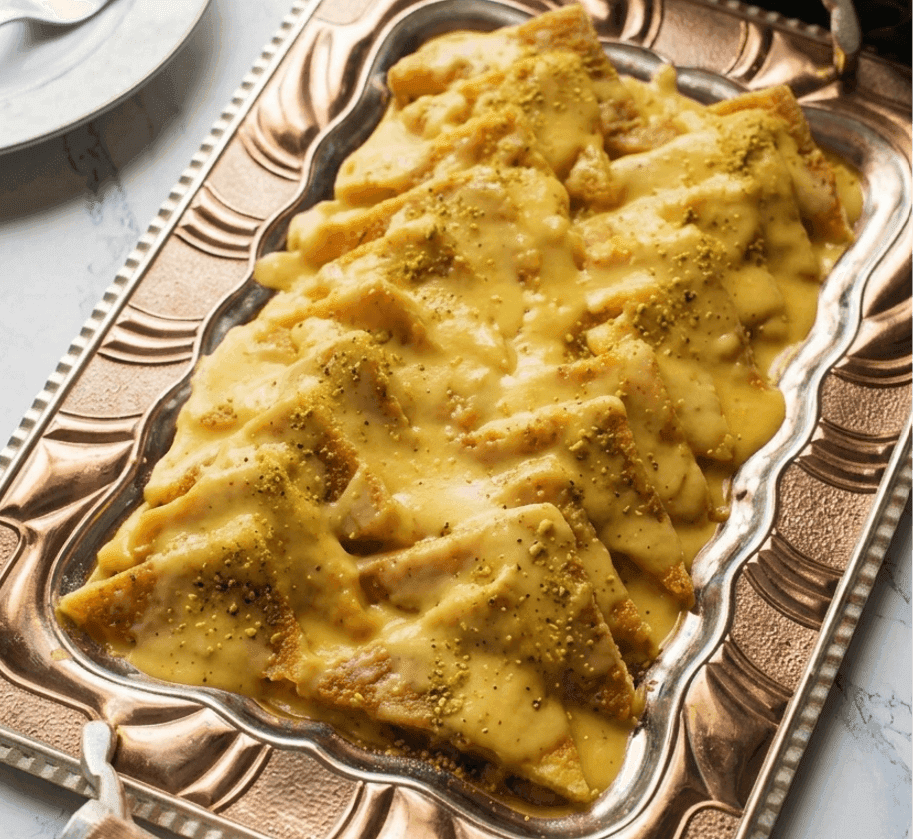
What the recipe does is quite simple in concept. Slices of white bread are fried in ghee until golden, then cooked inside a simmering pot of sweetened milk that has been perfumed with saffron and green cardamom. The bread absorbs the milk, softens into something that is no longer quite bread but is not a pudding either, and the remaining thickened milk is finished with fresh cream and poured over the top. The whole dish is scattered with crushed pistachios and almond slivers and served either warm or at room temperature.
What sets Wajiha's recipe apart is the decision to shallow-fry rather than deep-fry. Most classic versions call for the bread to be fully submerged in hot ghee or oil. Wajiha uses one tablespoon of ghee per batch, coats both sides of the bread, and fries until each triangle is deep golden and crisp. The result is a lighter slice that absorbs the saffron milk more evenly, does not feel heavy after eating, and produces a finished dish that readers consistently describe as perfectly balanced and not overly sweet. Her measurements serve eight to ten people comfortably, making this the most practical Shahi Tukre recipe available for home cooks preparing for a gathering.
Why This Recipe Works Better Than Others
Shallow-frying in ghee keeps the bread light without losing flavour
When bread is deep-fried, it saturates with oil before it ever meets the milk. That saturation means the slice absorbs less of the saffron-cardamom liquid and ends up feeling heavier in the final dish. Shallow-frying with one tablespoon of ghee per batch coats both surfaces evenly and creates the same golden crust, but the interior of the bread remains open and ready to take in the milk during the cooking stage. The flavour of the finished dish is indistinguishable from the deep-fried version. The texture is noticeably lighter.
Cooking the bread inside the milk rather than pouring milk over it ensures even absorption
Many recipes fry the bread, arrange the slices on a serving plate, and pour warm or cold rabri over the top. The surface of the bread becomes wet, but the interior stays dry because cold rabri poured over cool bread does not penetrate. Wajiha's method puts the fried bread directly into the simmering saffron milk, two to three minutes per side, so every part of the slice absorbs the liquid evenly. The milk also picks up a faint toasted note from the ghee on the bread, which deepens the overall flavour of the dish.
Cream added after all the bread is cooked creates a sauce, not a thin liquid
Once all the bread slices have been cooked and arranged in the serving dish, the pan holds a small quantity of thickened, deeply coloured saffron milk. Adding half a cup of fresh cream to this remaining milk and cooking for two minutes transforms it into a short, rich sauce with body and gloss. Cream added at the beginning of the milk stage would thin the liquid and prevent the bread from absorbing it properly. Added at the end, it does exactly what it should: it makes the leftover cooking liquid the most luxurious part of the whole plate.
Prep Time
5 min
Cook Time
25 min
Servings:
8
Ingredients
- White bread7 Loves
crusts removed, each slice cut into 4 triangles
- Milk5 cup
full fat mill
- Desi ghee5 tbsp
clarified butter
- White sugar1 cup
adjust to taste
- Green cardamom powder1 tsp
Method
Fry the Bread
Remove the crusts from all seven bread slices and cut each one into four triangles.
The triangle shape gives the maximum surface area for milk absorption and presents well in the serving dish.
There is no wrong size here, but keeping the pieces uniform means they cook evenly in the milk.
Heat one tablespoon of ghee in a large non-stick frying pan over medium flame.
Add as many bread triangles as fit in a single layer without overlapping.
The moment the bread makes contact with the ghee, toss and turn the pieces so that both sides are coated before the bread begins to colour.
This is the step that makes shallow-frying work as well as deep-frying.
Fry on both sides until each triangle is a deep, even golden brown with no pale patches remaining.
Remove from the pan and set aside on a plate.
Repeat the process for all the bread, adding one fresh tablespoon of ghee for each new batch.
The total across all batches will be approximately five tablespoons, which is exactly what the recipe calls for.
Chef's tip:
Tossing the bread in the ghee immediately on contact, before one side starts to set and colour, ensures both sides are coated evenly. Bread that sits on the pan on one side first absorbs all the ghee through that surface before the other side is ever touched. The result is one side golden and one side dry. Toss first, fry second.
Make the Saffron-Cardamom Milk
In the same frying pan, or in a wide-bottomed pot if the pan is too small, add all five cups of milk over medium flame.
The wider the surface area of the vessel, the faster the milk will reduce, which is an advantage at this stage.
Add the sugar, green cardamom powder, and saffron strands directly to the cold milk before the heat goes up.
Stir to distribute everything and bring the milk to a medium simmer, not a rolling boil.
Cook for ten to fifteen minutes, stirring occasionally to prevent the milk from catching on the bottom.
The milk will reduce by roughly twenty percent and turn a warm yellow from the saffron.
At this point, taste the milk and adjust the sugar.
The milk should taste noticeably sweeter than you want the finished dessert to be, because the sweetness dilutes once the bread is added and absorbs a portion of the liquid.
Chef's tip:
A pan with a large surface area reduces the milk faster and more evenly than a deep narrow pot. If using a standard saucepan, add five extra minutes to the simmering time and check the colour and sweetness before adding the bread.
Assemble, Finish, and Serve
Bring out the serving dish. With the milk at a steady simmer, add the fried bread slices one by one.
Let each slice cook in the milk for two minutes, then carefully flip it using a flat spatula and cook for a further two to three minutes.
The slices will soften considerably at this stage. Handle them with care because a slice that has been fully soaked through is fragile.
Remove each soaked slice and arrange it in the serving dish. Repeat for all the bread. The remaining milk in the pan will now be thicker, darker from the saffron, and concentrated in flavour.
Add half a cup of fresh cream to the remaining milk. Cook over medium flame for two minutes, stirring. Turn off the heat and stir for another two minutes.
Pour this thickened cream-milk sauce evenly over all the arranged bread slices.
Scatter pistachios and almond slivers generously over the top. Serve immediately for a warm dessert, or cover with cling film and refrigerate.
Shahi Tukre taste best at room temperature. If refrigerating, remove the dish from the fridge twenty minutes before serving. The dessert keeps well for up to one week refrigerated.
Chef's tip:
The cream goes in only after all the bread is cooked and out of the milk. Cream added to the milk at the beginning thickens the liquid before the bread has a chance to absorb it properly. Added at the end to the reduced cooking milk, it becomes a sauce rather than an ingredient. That is the difference between a good Shahi Tukre and a great one.
On Deep-Frying vs. Shallow-Frying
The question comes in almost every time someone makes this recipe. Will it taste the same if I shallow-fry? The answer is yes. Both versions have been made dozens of times. The golden crust that the bread needs, the one that holds up inside the milk and gives a slight chew at the edges, forms just as well in one tablespoon of ghee in a non-stick pan as it does in a kadhai full of oil. The calorie difference is significant. The flavour difference is not.
The saffron, the cardamom, and the milk are what make this dessert what it is. Make it in the way that works for your household. The result will be the same plate of golden, fragrant, softly soaked bread that has been sitting on Pakistani tables since the Mughal courts first put it there.
Nutritions
Per serving(~ two bread triangles with cream-milk sauce)
People Also Ask
Yes. Store in a covered container in the deep freezer. When you want to serve it, let it thaw at room temperature on its own. Do not microwave it, as microwaving causes the cream-milk sauce to separate and the texture of the bread to break down unevenly. Allow one to two hours of thawing time for a full tray.
Yes, though the method needs a small adjustment. Reserve about half a cup of the milk mixture before adding the bread. Pour the rest into a baking dish with the bread slices and bake, flipping the slices halfway through if they are not fully submerged. Once baked, mix the reserved milk with the cream and pour over the top before garnishing. The baked version has a slightly drier surface but is very close in flavour to the fried version.
Quite sweet. Noticeably sweeter than you want the finished dessert to be. The bread absorbs a significant amount of the milk as it cooks, diluting the sweetness of the sauce that remains. If the milk tastes only mildly sweet at the tasting stage, add two to three tablespoons of extra sugar, stir well, and taste again before adding the bread. The cream added at the end will mellow the sweetness slightly, which is another reason to keep the milk on the sweeter side before assembling.