
Rasmalai

Sanjyot Keer
Chef
“Sanjyot Keer is the celebrated chef and founder of Your Food Lab. He is renowned for his high-quality, cinematic food videos that blend traditional Indian flavors with modern, innovative techniques.”

Aarif
Food Journalist
Aarif is a devoted content writer at Regional Heritage Food (RHF), passionate about cooking and travel. He shares his culinary experiences and discoveries, inspiring others to explore new recipes and flavors.
Perfectly Soft Chena Patties in Saffron Cardamom Milk | The Halwai Ice-Shock Trick made at home
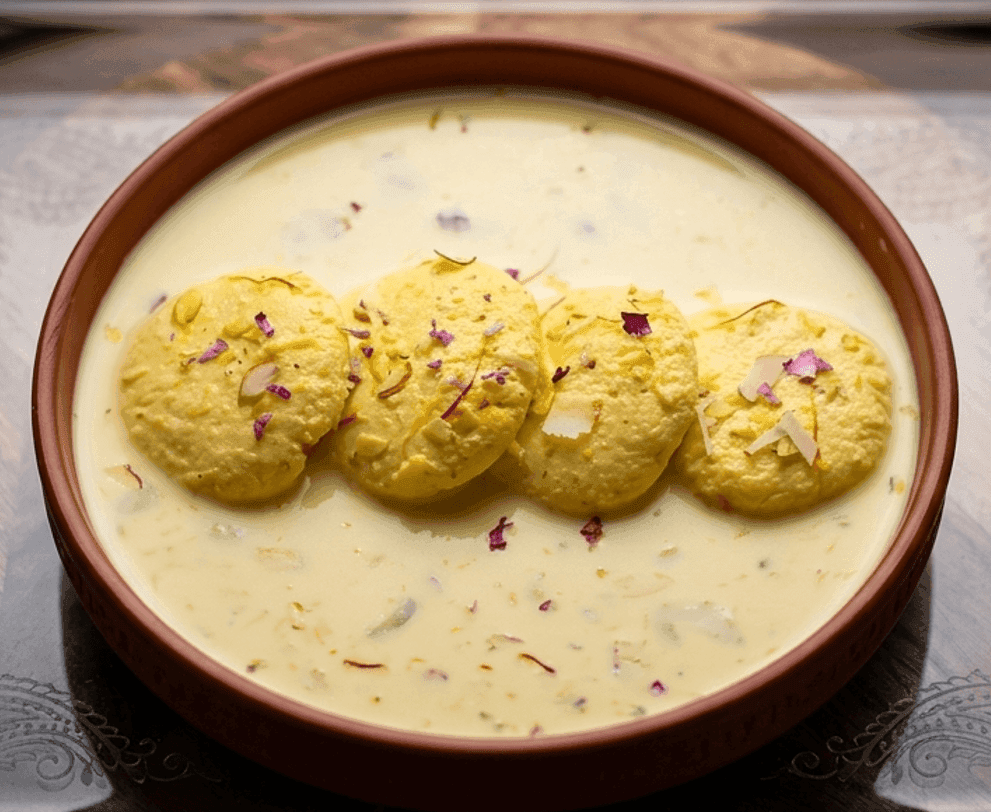
There is a mithai shop in every Pakistani city where the Rasmalai is different from everywhere else. Not just better but different in a way you notice immediately and cannot explain without sounding dramatic. Softer than they should be. Lighter than anything made from cheese has a right to be. Soaked all the way through with saffron milk that has turned each patty a faint golden colour from the center outward. People drive across the city for a specific shop's Rasmalai and they would not consider substituting it with any other dessert at a dawaat. This is not sentiment. It is evidence that when Rasmalai is made correctly, it occupies a category by itself.
Most home cooks approach Rasmalai with the kind of caution they reserve for pastry. They have heard the warnings: the chena turns rubbery, the patties crack in the syrup, the Rasmalai shrinks and comes out dense. These are real failures and they happen to experienced cooks as well as beginners. What makes them frustrating is that they look the same from the outside. A patty that is raw inside and a patty that is cooked correctly look identical until you bite in. A syrup that is the right consistency and one that is too thick look almost the same until the patties refuse to expand.
Chef Sanjyot Keer of Your Food Lab approaches Rasmalai as a chemistry problem, not a recipe problem. Every failure has a specific scientific cause. Rubbery chena comes from curdling milk at too high a temperature. Cracked patties come from over-drained chena with too little moisture. Dense Rasmalai that contracts after leaving the syrup comes from skipping the ice-shock step that halwai kitchens have used for generations. His method identifies each failure point precisely and engineers a step to prevent it. Once you understand why each instruction exists, the recipe stops feeling like a list of rules and starts feeling like a logical sequence with a guaranteed outcome.
Why This Recipe Works Better Than Others
Wait Two Minutes Before Curdling the Milk:
Milk curdled at a full boil produces tight, rubbery curds because the high temperature causes proteins to coagulate too fast. Taking the pot off the heat for two minutes lowers the temperature just enough so the curds form slowly and loosely. Those loose curds knead smoothly, hold moisture well, and stay soft after boiling. No other step affects the final texture more than this one.
Drain the Chena for Exactly Ten Minutes
Over-drained chena becomes dry and crumbly. Dry chena cracks when shaped, splits in the boiling syrup, and stays firm even after soaking in the ras. Ten minutes of draining leaves enough moisture inside so the chena shapes easily and stays tender. Set a timer because judging by feel alone is not reliable enough at this stage.
Use the Ice-Shock Method to Lock In the Spongy Texture
When patties finish boiling, they are at their fullest and spongiest. Cooling at room temperature allows the structure to contract and the patties become denser. Transferring them immediately into ice-cold water stops that contraction and locks the texture in at its best point. The water must be genuinely cold with plenty of ice to work properly.
Dilute the Vinegar Before Adding It
Undiluted vinegar causes the milk to curdle quickly into small, compact, slightly grainy clusters. Mixing the vinegar with an equal amount of water slows the reaction down, giving better control over how much acid goes in. The slower curdling produces larger, softer curd flakes that are easier to knead and produce smoother chena.
Add One Teaspoon of Maida to the Chena
Chena alone can crack or break during ten to twelve minutes of vigorous boiling. One teaspoon of maida kneaded into the chena before shaping binds the proteins together and keeps each patty intact through the entire boil. The quantity is small enough that it has no effect on the taste or texture of the finished Rasmalai.
prep time
30 min
cook time
45 min
CHILL TIME
3h
patties
14
Ingredients
 Milk2 liter
Full fat, 1 liter for ras, 1 liter for chena
 Sugar2 cup
o.5 cup for ras, 1.5 cup for sugar syrup
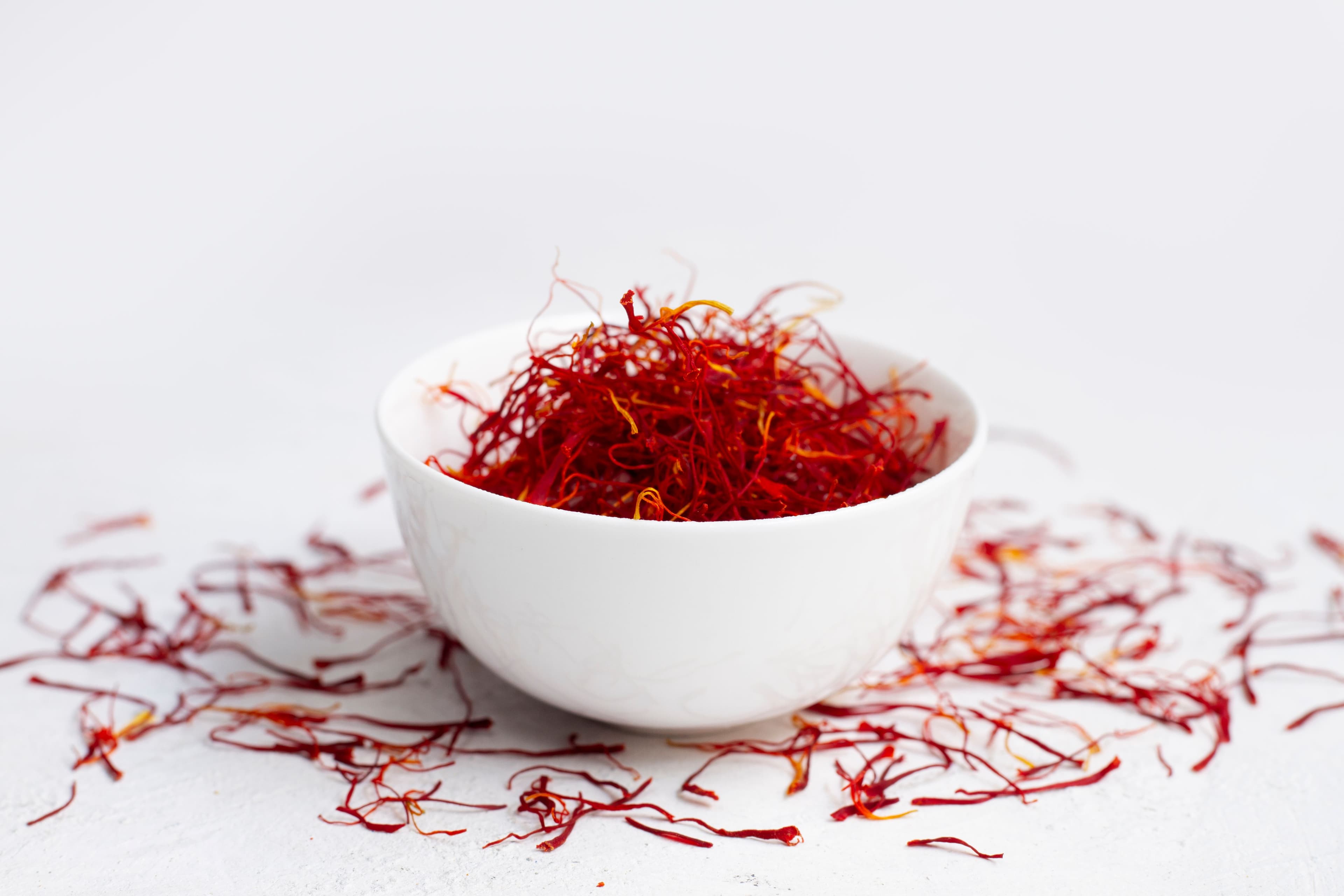 Saffron strands1 Pinch
rub between fingers before adding to release colour and aroma
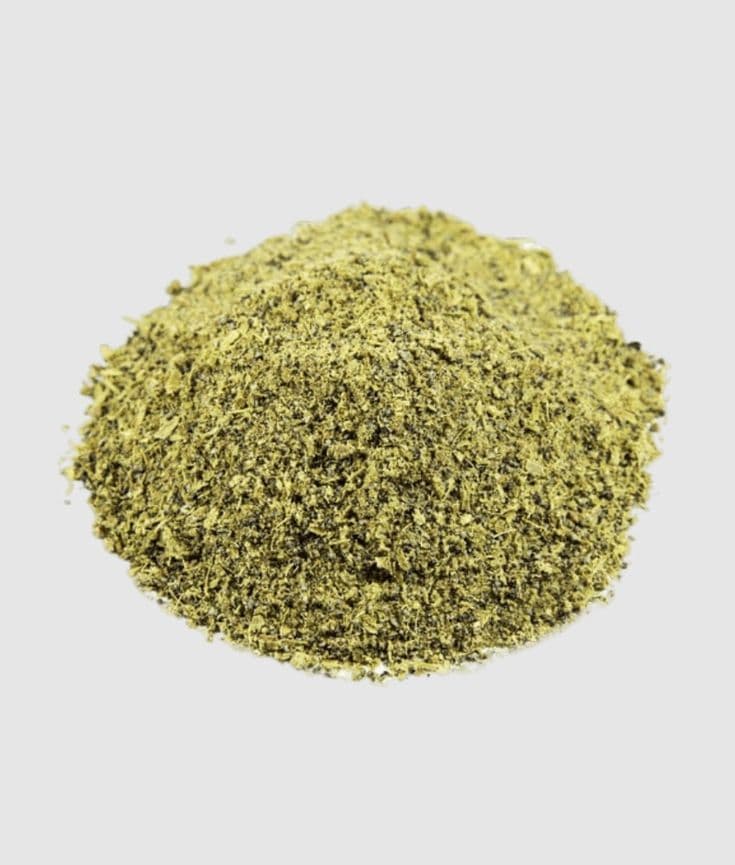 Green cardamom powder0.5 tsp
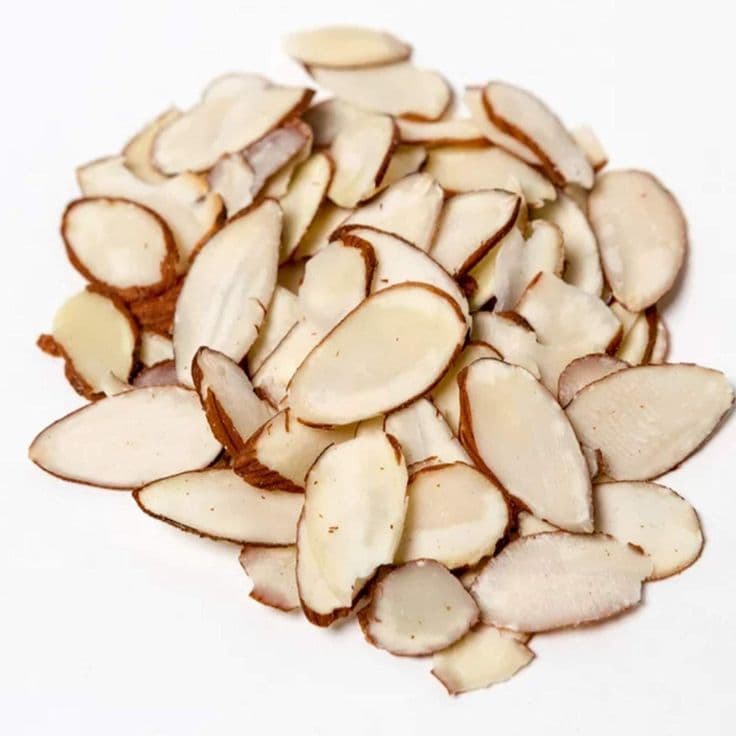 Almonds8 units
thiny sliced
Method
PREPARE THE RAS FIRST
Pour 1 litre of full-fat buffalo milk into a wide heavy-bottomed pan. Bring to a boil over high heat, then reduce to medium flame. Simmer for 10 to 12 minutes, stirring occasionally and scraping the sides, until the milk reduces to a lightly thickened but freely flowing consistency.It should coat the back of a spoon lightly and fall in a thin flowing drip, not in thick drops.
Add half a cup of sugar, the saffron, cardamom powder, and sliced nuts. Stir until the sugar dissolves completely.
Remove from heat and allow to cool fully to room temperature before the patties go in.
Warm ras causes the patties to break apart on contact.
Chef's Tip:
Rub the saffron strands lightly between your thumb and fingertip for a few seconds before dropping them into the warm milk. This physical pressure breaks open the strands and releases the colour and aroma compounds far more effectively than dropping in whole strands. A small bowl with a few drops of warm milk can also be used to bloom the saffron for two minutes before adding everything to the pan. The colour will be more vivid and the fragrance stronger.
CURDLE THE MILK AT THE RIGHT TEMPERATURE
Bring 1 litre of full-fat buffalo milk to a full rolling boil in a separate heavy pot. Turn off the heat completely. Wait exactly 2 minutes without touching or stirring the milk.
While it rests, mix 2 tbsp white vinegar with 2 tbsp water in a small bowl.
After the 2 minutes are up, begin stirring the milk in slow gentle circles.
Gradually pour in the diluted vinegar a small amount at a time, continuing to stir gently after each addition. Watch the milk as you add the vinegar. Stop the moment the milk separates completely into white curds and the liquid turns a clear greenish-yellow colour.
Use only as much vinegar as needed to reach this point. If some diluted vinegar is left in the bowl, do not add it.
Chef's Tip:
The 2-minute rest is the most important single instruction in this recipe. Do not skip it, do not shorten it, and do not estimate it. Set a timer. Milk curdled at a full rolling boil produces tight, compressed, rubbery curds. Milk curdled after a 2-minute rest produces open, loose, soft curds. The difference in the final Rasmalai texture is dramatic and it cannot be corrected at any later stage
STRAIN AND RINSE THE CHENA IMMEDIATELY
Line a large sieve with a double layer of muslin cloth. Pour the curdled milk and whey through the cloth. The curds will collect in the cloth and the whey will drain through.
Immediately place the sieve under cold running water and rinse the chena for 30 to 40 seconds, turning the cloth to rinse all sides.
This stops the cooking process that the residual heat would otherwise continue and washes away all vinegar sourness.
Taste a small piece of the rinsed chena. It should taste clean, fresh, and milky with no sourness at all. Gather the corners of the muslin cloth and twist closed.
Chef's Tip:
Rinse immediately the moment the straining is done. Chena that sits for even two or three minutes without rinsing retains a faint acid note that does not fully disappear even after long soaking in saffron milk. The ras masks it partially but a perceptive taster will notice it. Cold water also slightly firms the curd structure, which helps the chena hold its shape during the next step.
DRAIN FOR EXACTLY 10 MINUTES
Tie the muslin cloth tightly and hang it from a tap or hook over a bowl.
Alternatively, place it in a sieve and set a light weight on top.
Set a timer for exactly 10 minutes. When the timer goes off, unwrap the chena and test it.
When pressed lightly it should feel like firm playdough, not dry and crumbly, not wet and sticky. It should hold an impression when pressed and spring back only slightly. This is the correct moisture level for soft pliable patties.
Chef's Tip:
Ten minutes is not approximate. This is the single most important number in the recipe. Chena drained for 20 minutes becomes noticeably drier. Chena drained for 30 minutes is significantly too dry. Once the chena is over-drained, there is no reliable way to restore the correct moisture level. Adding water directly to dry chena makes it wet on the outside but uneven in texture throughout. Set the timer. Check at exactly 10 minutes
KNEAD AND SHAPE THE CHENA
]Transfer the chena to a clean flat surface. Crumble it evenly across the surface so no large lumps remain.
Begin kneading using the heel of your palm in a forward pushing and smearing motion, not a folding or squeezing motion. The heel-push motion stretches and smooths the protein network in the chena.
Knead continuously for 4 to 5 minutes until the chena becomes completely smooth, uniform, and slightly shiny with no visible lumps anywhere. Add 1 tsp of maida and knead for another full minute until incorporated.
Divide into equal portions roughly the size of a large marble. Roll each into a smooth ball between greased palms, then flatten gently into a round patty approximately 1.5cm thick.
Inspect every patty surface before placing on the tray. Even a hairline crack must be sealed with a lightly moistened fingertip before the patty goes into the syrup.
Chef's Tip:
The kneading motion matters. Folding and squeezing the chena compresses the protein network and produces a denser texture. The heel-push smearing motion stretches and aligns the proteins into a smoother network that holds moisture better and produces a lighter finished patty. If cracks appear during shaping, the chena is slightly too dry. Wet your palms very lightly with a few drops of water and knead briefly. Do not add water directly to the dough
COOK THE PATTIES IN THIN BOILING SYRUP
Combine 1.5 cups sugar and 6 cups water in a wide, deep pan. Bring to a full rolling boil over high heat. The entire surface should be bubbling vigorously with no quiet patches.
Carefully lower the shaped chena patties into the boiling syrup one by one using a spoon, leaving space between each for expansion.
Cover tightly with a lid. Cook on high heat for 10 to 12 minutes without opening the lid at any point. When done, each patty will have approximately doubled in size.
Chef's Tip:
Never lift the lid during cooking. The trapped steam is not a byproduct of the cooking process. It is the mechanism. Steam pressure inside the covered pan is what inflates each patty from the inside, creating the open, spongy structure that defines a correctly made Rasmalai. Opening the lid even briefly releases this pressure and the patties deflate immediately and permanently. High heat must be maintained throughout. Low or medium heat produces flat, dense patties that never expand regardless of cooking time
ICE-SHOCK IMMEDIATELY AFTER COOKING
Before putting the lid on the syrup in Step 6, prepare a large bowl of ice-cold water with plenty of ice. It must be ready and waiting before the cooking starts because the transfer must happen immediately when the timer goes off.
The moment the 10 to 12 minutes are up, remove the lid, and use a slotted spoon to transfer the puffed patties one by one directly into the ice-cold water. Work quickly. Let them sit in the ice bath for 2 to 3 minutes without touching them.
Chef's Tip:
The ice bath must be at refrigerator-cold temperature or colder throughout the full 2 to 3 minutes. Add ice generously before the cooking starts. Room-temperature water or barely cool water does not produce the same structural effect. The mechanism is thermal shock: the sudden drop in temperature sets the expanded protein and starch network in its inflated position before the gradual cooling process can begin to contract it. Prepare the bath before the lid goes on, not after the timer goes off
SOAK IN RAS AND CHILL OVERNIGHT
Remove the patties from the ice bath one by one. Hold each one gently between both palms and press once, lightly, to squeeze out the absorbed ice water.
Do not squeeze hard or the patty will compress and lose its shape. Drop each patty into the cooled ras. Ensure all patties are fully submerged in the milk.
Cover the bowl and refrigerate for a minimum of 2 to 3 hours. Overnight is strongly preferred.
Chef's Tip:
The refrigeration time is when the transformation from cooked cheese to Rasmalai actually happens. After 2 hours, the patties will have absorbed saffron milk primarily from the outer layer. After an overnight rest, the absorption will have reached the center of each patty and every bite will have a uniform colour, flavour, and sweetness throughout. Serving Rasmalai too soon, even after 2 hours, produces patties that taste mostly of plain chena with flavoured milk around them. Overnight chilling produces patties where the saffron and cardamom are present in every single bite.
Storage and Serving
The minimum chilling time is 2 to 3 hours and technically the Rasmalai is edible after this. But served at the 2-hour mark, the patties will taste mostly of plain chena surrounded by flavoured milk. The saffron, cardamom, and sweetness will be present in the outer layer of each patty and thin at the center. After an overnight rest of 8 to 12 hours in the refrigerator, the ras has penetrated each patty completely and every bite has the same colour, sweetness, and fragrance from skin to center.
The patties also firm up very slightly during overnight refrigeration, producing a texture that is perfectly spongy rather than overly soft and fragile. For any occasion where you want the best possible result, make the Rasmalai the evening before.
The following day, stir 2 to 3 tablespoons of cold full-fat milk into the ras if it has thickened overnight, garnish with a few fresh saffron strands and sliced nuts, and serve cold directly from the refrigerator. This is how the best mithai shops serve it and it is the version that earns the compliments
Nutritions
Per Serving (3 patties with ras)
People Also Ask
Rubbery Rasmalai is caused by one of three things, and often more than one at the same time. The first is curdling the milk at too high a temperature without the 2-minute rest. The second is over-draining the chena beyond 10 minutes. The third is insufficient kneading that leaves uneven density and lumps inside the patty.
Follow the temperature rule without exception, set a timer for the draining step, and knead with the heel of the palm for a full 4 to 5 minutes until the chena is completely smooth and slightly shiny.
Cracked patties happen when the chena is too dry from over-draining, when it was not kneaded long enough to become smooth and cohesive, or when the patties were shaped with uneven thickness so thin edges break under expansion pressure. Ensure the maida is fully incorporated through one full minute of kneading after adding it. Inspect every patty surface before it goes into the syrup. Any hairline crack must be sealed with a lightly moistened fingertip. Cracks that look small on raw chena open completely in boiling syrup.
Three causes. The syrup was not at a full rolling boil when the patties were added. The heat was reduced or the lid was lifted during cooking. Or the chena was too dry and compact before shaping. The syrup must be bubbling vigorously across its entire surface before any patty goes in. Once the lid is on, the heat must stay on high and the lid must not be lifted before the full 10 to 12 minutes are complete. Trapped steam is the expansion mechanism. Opening the lid releases it permanently.
The correct ras consistency coats the back of a spoon in a thin flowing layer and falls off in a free drip rather than in thick drops. It should look somewhere between full-fat milk and thin cream. If the ras has reduced too far to a thick, rabri-like consistency, it will not absorb into the patties and the Rasmalai will taste only of the outer surface. Thin it by stirring in small amounts of warm full-fat milk, one tablespoon at a time, until the consistency flows freely. Do this while the ras is still warm for easier incorporation.
No. Store-bought paneer is pressed very firmly to extend its shelf life and is far too dry and dense to produce soft Rasmalai. It does not knead to the correct smooth, pliable texture, does not expand properly in boiling syrup, and produces a firm, chewy patty after soaking rather than a soft, spongy one. The fresh chena process, specifically the 10-minute draining window that leaves the curd with the correct interior moisture, is the entire foundation of the recipe. There is no substitute.