
Falooda

shireen anwar
Chef
“Chef Shireen Anwar is a legendary Pakistani culinary icon and long-time host of Masala Mornings on Hum Masala. With over 30 years of experience, her motherly teaching style and meticulous recipes have made her a household name for millions worldwide.”

Aarif
Food Journalist
Aarif is a devoted content writer at Regional Heritage Food (RHF), passionate about cooking and travel. He shares his culinary experiences and discoveries, inspiring others to explore new recipes and flavors.
Ultimate Strawberry Falooda with Condensed Milk, Homemade Noodles, and Cooling Tukh Malanga
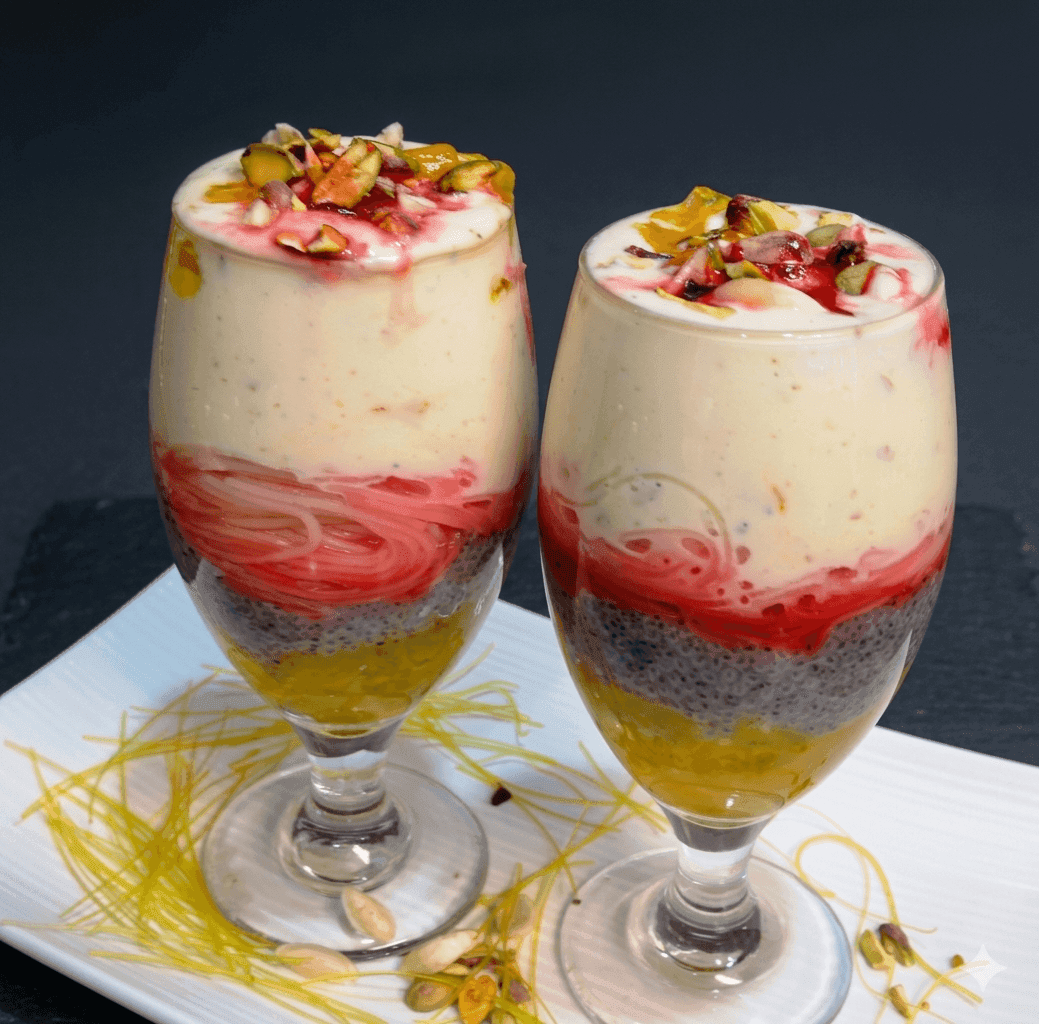
Falooda is not a drink and not quite a dessert. It is a layered experience in a tall glass, each spoonful delivering a different combination of flavour, texture, and temperature that no single-component beverage can replicate.
Falooda traces its lineage to the Persian dessert faloodeh, starch noodles frozen with rose water which travelled through Mughal kitchens into the food culture of the Indian subcontinent and was gradually transformed over centuries into the elaborate, layered summer drink that defines warm evenings across Pakistan, India, and their diasporas worldwide. Shireen Anwar's Baloch Ka Falooda, is the comprehensive Pakistani home-cook's version of this layered masterpiece.
Why This Recipe Works Better Than Others
Homemade Arrowroot Falooda Noodles Have Superior Texture
Store-bought dried falooda noodles, once boiled, become soft and slightly mushy within minutes, they lack the firm, glossy, gel-like quality of freshly made falooda. Shireen Anwar's recipe makes the falooda noodles from scratch: arrowroot dissolved in water, cooked until thick and glossy, then pressed immediately through a falooda mould into ice-cold water. The cold water sets the hot arrowroot mixture the instant it exits the mould, creating noodles that are perfectly translucent, firm, and silky. The contrast between these fresh-cooked noodles and every other component in the glass is entirely different from any dried or pre-made substitute.
Condensed Milk Enriches the Milk Base Beyond Plain Sugar
Many falooda recipes use plain milk sweetened with sugar, which produces a thin, watery backdrop that gets lost among the stronger components. Shireen Anwar's Baloch Ka Falooda uses a 5-cup milk base enriched with half a tin of condensed milk. The condensed milk adds sweetness, but more importantly it adds fat, body, and a creamy richness that coats the palate and ties all the other elements together. This milk base, chilled for 4 hours before assembly, is the binding thread that runs through every layer of the glass.
Gulab Sharbat Provides the Authentic Floral Fragrance
Rose syrup provides falooda with more than sweetness, its floral fragrance is the olfactory signature of the drink, the scent that signals to the nose before the glass even reaches the lips what pleasure is coming. Added last before the ice cream, it settles into the layers of the glass in pools of deep pink, creating the characteristic ombre of white milk and rose-red sharbat that makes a well-assembled falooda as beautiful to look at as it is to drink.
Tukh Malanga Seeds Add Cooling Benefit and Unique Texture
Tukh malanga (sweet basil seeds), also known as sabja seeds or falooda seeds are soaked in water until each tiny black seed develops a thick, clear gelatinous coating several times its original size. These bloomed seeds have no flavour of their own but provide a cool, gel-like burst in every sip and contribute a body-cooling effect that is central to the falooda's function as a summer drink.
prep time
20 min
Chill time
4h
cook time
15 min
servings
4
Ingredients
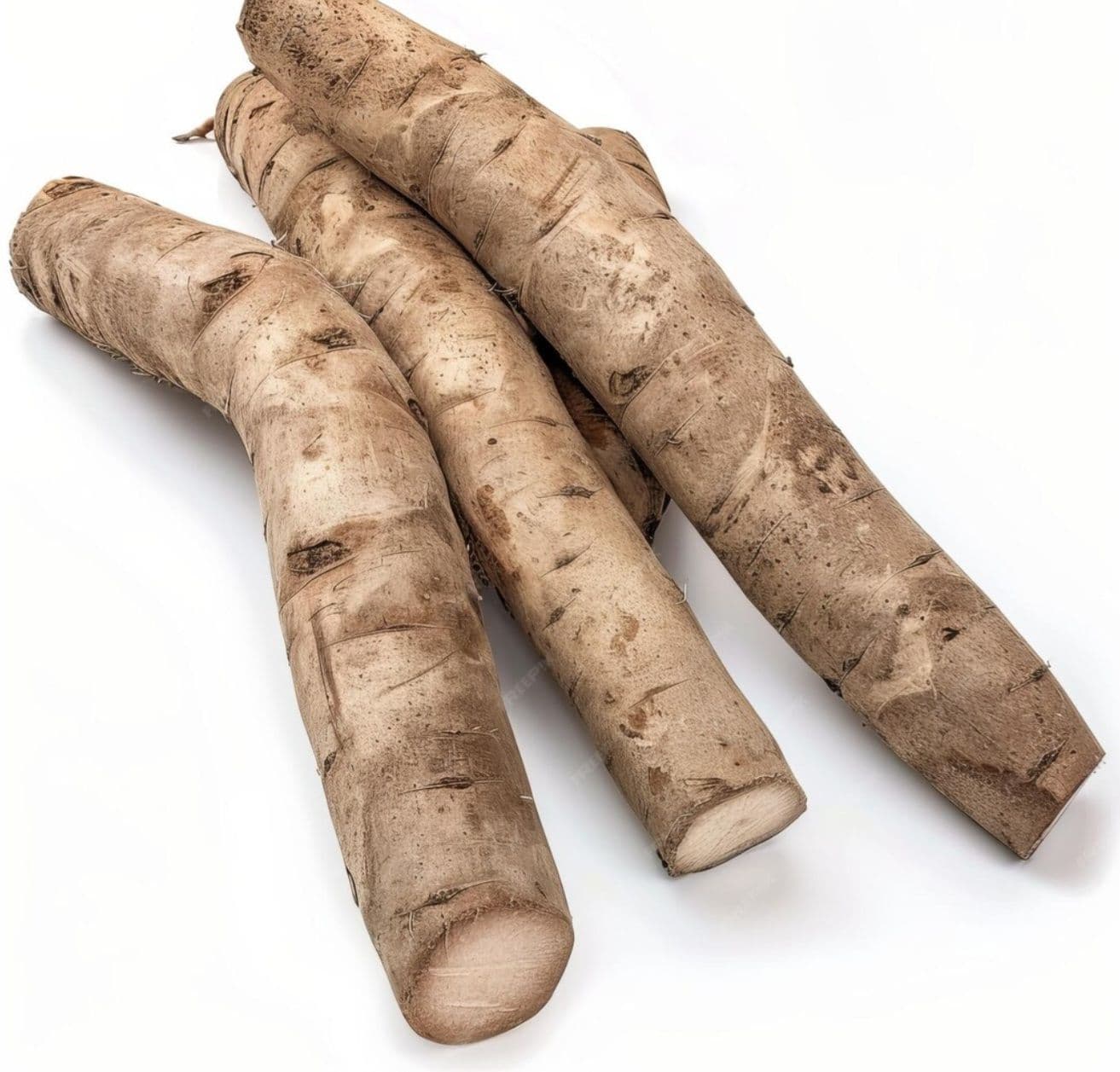 Arrowroot1.5 cup
 Water3 cup
for falooda noodles
 Milk5 cup
Full fat
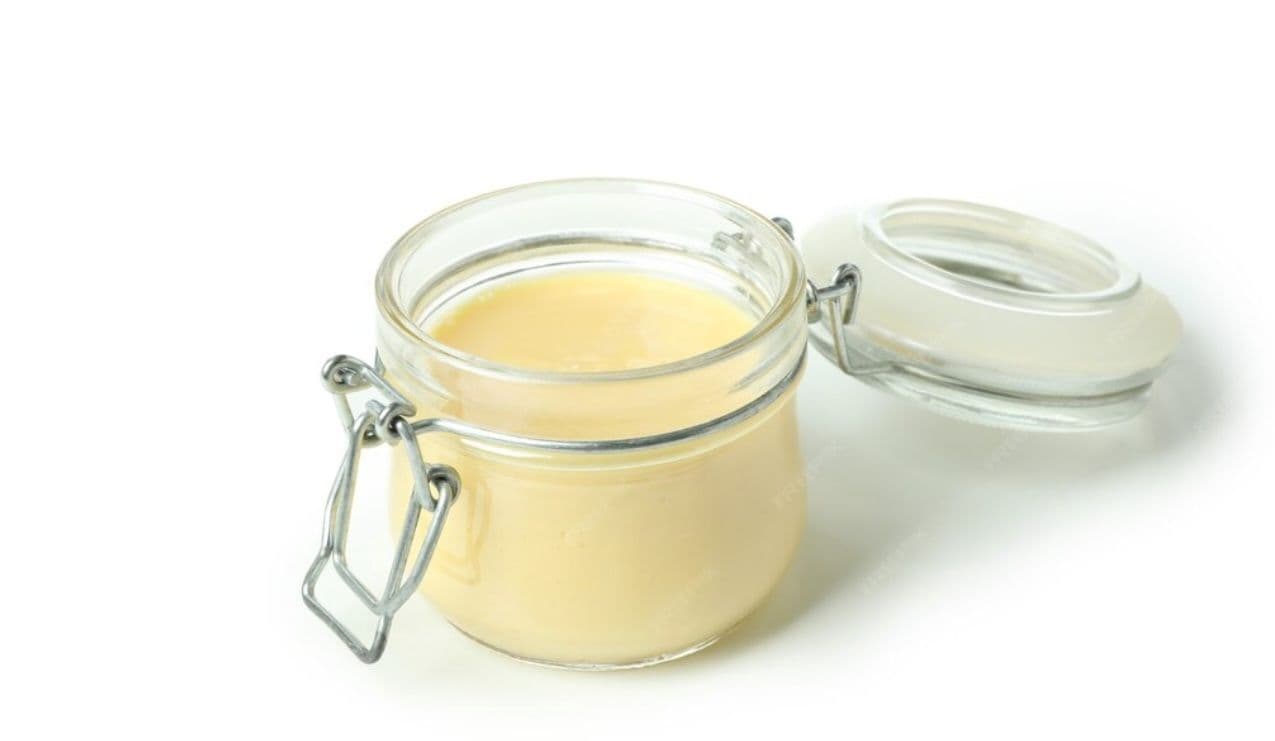 Condensed milk200 g
 Rose syrup2 tbsp
Method
Soak the Tukh Malanga Seeds
Place 1 tablespoon of tukh malanga (sweet basil / sabja) seeds in a bowl.
Cover with 1 cup of cold water. Stir gently.
Leave to soak for a minimum of 30 minutes, the seeds will absorb water and each one will develop a thick, transparent gelatinous coating, swelling to 4-5 times their original size.
Once fully bloomed, drain off any excess water through a fine strainer.
Refrigerate the soaked seeds until ready to assemble.
They can be soaked up to 2 hours in advance.
Chef's Tip:
Check that all seeds have bloomed before using, any seeds that remain hard and unsprouted after 30 minutes were likely very old stock that have dried out completely. Fresh tukh malanga seeds bloom fully within 20-30 minutes. If seeds are slow to bloom, replace the water with fresh cold water and allow another 10-15 minutes. Old, over-dry seeds will not bloom properly regardless of soaking time
Prepare the Strawberry Jelly
Prepare the strawberry jelly according to the packet instructions.
Dissolve the jelly powder in the required hot water as specified on the packet, stir until completely dissolved, then allow to cool to room temperature.
Pour into a shallow dish or tray and refrigerate for a minimum of 2 hours until fully set.
Once set, cut the jelly into small 1cm cubes with a knife. Keep refrigerated until ready to assemble.
The jelly should be made well in advance, ideally the night before use and ensure it is fully firm.
Chef's Tip:
Under-set jelly that has not had enough time to firm completely will break apart into liquid when added to the glass and muddy the layers rather than sitting as distinct cubes. If the jelly is still wobbly when tested with a knife after 2 hours, return it to the refrigerator for another hour before cutting. Cold water speeds jelly setting. Placing the dish in the coldest part of the refrigerator near the back reduces set time
Make the Chilled Condensed Milk Base
Pour 5 cups of full-fat milk into a large bowl or jug.
Add half a tin (approximately 200g) of sweetened condensed milk.
Whisk or stir thoroughly until the condensed milk is completely incorporated and no streaks remain.
The mixture should be uniform in colour and slightly thicker than plain milk.
Cover the bowl with cling film and refrigerate for a minimum of 4 hours, or overnight.
The milk must be served ice-cold; the temperature of the milk base is as important to the final falooda as any other component.
Chef's Tip:
Use the freshest full-fat milk available. Full-fat milk provides the creamy body that semi-skimmed milk cannot. For an even richer milk base closer to traditional rabri-style falooda milk, simmer the plain milk first until reduced by one quarter, cool completely, then add the condensed milk and chill. This additional step produces a thicker, more intensely flavoured milk base that is noticeably different from un-reduced milk
Cook the Arrowroot Falooda Mixture
In a heavy-bottomed saucepan, combine 1.5 cups of arrowroot with 3 cups of water.
Whisk until completely smooth with no lumps. The mixture will look like thin white milk.
Place the pan on medium heat. Cook, stirring continuously with a wooden spoon or silicone spatula, for approximately 8-10 minutes.
The mixture will first appear watery, then gradually thicken and turn from white to translucent.
Continue stirring without stopping. The mixture is ready when it is thick, glossy, and translucent throughout.
It should pull away cleanly from the sides of the pan and hold its shape briefly when the spoon is lifted.
Chef's Tip:
Stir without pausing from the moment the pan goes on the heat. Arrowroot begins to settle and stick to the base of the pan within seconds of being left unstirred. A burnt patch on the base will taint the flavour of the entire batch with a bitter, starchy undertone that no amount of dilution corrects. Keep the heat at medium, too high causes the base to scorch even with continuous stirring
Press Through the Falooda Mould into Ice Water
Prepare a large bowl or deep tray filled with cold water and a generous amount of ice.
Working quickly while the cooked arrowroot mixture is still hot, pour it into a falooda mould (a flat-based press with small round holes) and hold the mould directly over the bowl of iced water.
Press firmly and steadily on the top of the mould.
The hot arrowroot mixture will be forced through the holes in thin strands that fall directly into the ice water and set immediately on contact into firm, glossy falooda noodles.
Allow the noodles to remain in the ice water for 2-3 minutes until fully cooled and firm.
Chef's Tip:
Work fast once the mixture is poured into the mould. Arrowroot mixture begins to firm inside the mould within 30-40 seconds of cooling, making pressing difficult. If the mixture begins to set before all of it is pressed through, briefly warm the mould over the stovetop (not the flame directly) for 10-15 seconds to re-loosen it. A falooda mould is available at any local grocery store. If unavailable, a fine-holed sieve can be used to push the mixture through using a spoon
Chill the Falooda Noodles
Once all the falooda noodles are pressed and floating in the iced water, drain off some of the ice water and replace with fresh cold water.
Store the falooda noodles submerged in cold water in the refrigerator until ready to assemble. They can be prepared up to 3-4 hours in advance.
Before assembling, drain the noodles through a colander and shake gently to remove excess water.
Do not allow the noodles to sit dry without water, they will stick together and become impossible to separate without breaking.
Chef's Tip:
If making falooda for a large group, keep the finished noodles submerged in fresh cold water in the refrigerator in a sealed container. They hold their texture and firmness in cold water for up to 8 hours without deterioration. Replace the water once if preparing very far in advance. The water becomes slightly starchy as the noodles sit in it.
Assemble the Falooda Glasses
Take 4 tall glasses (at least 400ml capacity).
Into each glass, build the layers in this order from base to top:
first, add a handful of strawberry jelly cubes to the base;
add a portion of drained falooda noodles;
add 2-3 tablespoons of drained fruit cocktail;
add 1-2 tablespoons of soaked tukh malanga seeds;
pour in the chilled condensed milk base to three-quarters full;
drizzle gulab sharbat generously over the milk, it will settle into beautiful deep-pink pools throughout the white milk;
finally, place one or two generous scoops of strawberry ice cream on top.
Garnish with sliced almonds and pistachios.
Serve immediately with both a straw and a long spoon.
Chef's Tip:
Pour the gulab sharbat over the back of a spoon held just above the surface of the milk to slow its descent and create the most dramatic ombre layering effect. The sharbat will float momentarily before slowly drifting downward through the white milk in visible streams of pink. This visual element is part of the experience; do not stir before presenting the glass to your guest
Master Tip: Temperature of Every Component Matters.
A falooda assembled at room temperature is a fundamentally inferior drink. Every component except the rose sharbat and ice cream must be refrigerator-cold at the moment of assembly: the milk base, the jelly cubes, the tukh malanga seeds, the falooda noodles, and even the fruit cocktail.
When all cold elements are in place and the ice cream is added at the last moment, the entire glass holds its temperature for the full 5-7 minutes of enjoyment. A falooda where the milk is slightly warm or the jelly is room temperature feels flat and compromised from the first sip. Chill everything, assemble cold, add ice cream last.
Nutritions
Per Glass (~400ml)
People Also Ask
Tukh malanga is the Pakistani Urdu name for sweet basil seeds (also called sabja seeds or falooda seeds in India and Sri Lanka, and tukmaria in Arabic). They are tiny black seeds that, when soaked in water, develop a thick, clear gelatinous coating. They have no flavour of their own but provide a cooling sensation, a unique gel-like texture, and are considered to have body-cooling properties in traditional medicine. Chia seeds are the most commonly available substitute — they develop a similar gel coating when soaked, though the coating is slightly thinner and less pronounced. Tukh malanga is available at any Pakistani or Indian grocery store
A falooda mould (chakla with holes) is available at Pakistani grocery stores for very little cost and is worth purchasing if you plan to make falooda regularly. For a one-time make, workable alternatives include: pressing the hot arrowroot mixture through a large-holed colander or strainer using the back of a spoon; using a piping bag with a small round nozzle to pipe thin strands into the ice water; or pouring the hot mixture into a thin layer on a cold tray, allowing it to set, then cutting into thin strips. The last method produces flat noodle-like strips rather than round strands but delivers the same arrowroot texture.
Yes. Corn flour (cornstarch) is a widely used substitute for arrowroot in falooda noodles. The technique is identical: dissolve in water, cook until thick and glossy, press through a mould into iced water. Corn flour falooda noodles are very slightly less translucent than arrowroot ones and have a marginally more neutral flavour, but the difference is small.
Use the same ratio. 1.5 cups corn flour to 3 cups water. Some recipes add a pinch of yellow food colouring and a few drops of kewra (screw pine) essence to the corn flour mixture for fragrance and colour, which is the approach used in Shireen Anwar's Malai Kulfi Falooda version.
The individual components can all be made well in advance and refrigerated separately: tukh malanga seeds (soak up to 2 hours before serving), jelly (make the day before), falooda noodles (prepare up to 8 hours before, store submerged in cold water), milk base (prepare the day before and chill), fruit cocktail (open and chill).
However, assemble each glass only at the moment of serving, once assembled, the ice cream melts, the layers merge, and the drink becomes warm and diluted within 10 minutes. For a party, set up a falooda station with all components chilled and in separate bowls, and assemble each glass as guests request.
Yes. Kulfi Falooda is in fact the more traditional and formally named version of this dessert. Using sliced kulfi instead of a scoop of ice cream produces a denser, richer, milk-based frozen topping that melts more slowly than ice cream and gives each sip a more intensely flavoured, creamier finish. Any flavour of kulfi works, malai (plain cream), pistachio, mango, and rose kulfi all pair beautifully with the rose sharbat base.