
Bihari Beef Kabab

Bilal Bhatti
Chef
“GoldenGully, born Bilal Bhatti in 1994, is a Pakistani‑Canadian chef and YouTuber. Formerly an immigration lawyer, he gained fame for creative Pakistani fusion recipes, humor, and global food storytelling.”

Aarif
Food Journalist
Aarif is a devoted content writer at Regional Heritage Food (RHF), passionate about cooking and travel. He shares his culinary experiences and discoveries, inspiring others to explore new recipes and flavors.
Marrow-Soft Beef Strips, Mustard Oil Marinade, and Coal-Smoked Dhuwar
You have eaten Bihari Kabab at a good restaurant and you have spent the drive home trying to figure out what they do to the meat. It is not just tender. It is something beyond tender. It is the kind of soft that stops you mid-bite because you expected resistance and found none. That texture does not come from technique alone. It comes from one ingredient that most home recipes either skip or get wrong: raw green papaya.
Bihari Kabab is the BBQ dish of the Bihari community of Pakistan and it has earned its place at every Eid dastarkhwan, every Ramadan iftaar, and every serious mixed kabab platter in the country. Long, flat strips of beef marinated overnight in mustard oil, fried and fresh onions, yogurt, and a nine-spice masala that includes mace and nutmeg. Grilled over charcoal until charred on the outside. Finished with dhuwar, a coal smoke infusion that takes three minutes and transforms the dish completely.
GoldenGully's Bilal Bhatti delivers one of the most technically honest Bihari kabab tutorials on YouTube. No padding, no shortcuts, no unnecessary steps. Just the real method explained clearly, with the kind of attention to detail that explains exactly why the restaurant version always tasted different from everything you made at home. This recipe closes that gap.
Why This Recipe Works Better Than Others
Raw Papaya Tenderizes the Meat from the Inside Out
Acid and salt soften only the surface of the meat. Raw green papaya contains an enzyme called papain that penetrates deep into the muscle fibers and breaks down the structural proteins from within. Two to three tablespoons of fresh papaya paste in the marinade produces a tenderness that no amount of cooking time, pounding, or acidic marinade can match. The papaya must be fully unripe and green because any yellow on the skin means most of the papain is already gone.
Mustard Oil Is the Flavour Identity of This Dish
When you eat a Bihari kabab and recognize that distinctive aroma immediately, you are tasting mustard oil. Its sharp, pungent raw character mellows during grilling into a warm, nutty depth that no other oil produces. Remove it and the kabab becomes a well-seasoned beef strip. It is no longer Bihari kabab.
Two Types of Onion Build a Layered Marinade
Fried onions and fresh crushed onions do different jobs in the same marinade. The fried onions add concentrated sweetness and roasted depth. The fresh onions add moisture and a sharp, clean flavour that penetrates the meat during the long marination. Using only one type produces a simpler, flatter result.
Dhuwar Smoke Completes the Dish
A glowing piece of charcoal placed among the cooked kababs with a teaspoon of ghee poured over it produces thick, fragrant smoke in seconds. Two to three minutes under a lid infuses every kabab with a deep charcoal aroma that no grill pan or oven can replicate. Without it the kabab is well-spiced. With it, it is authentic.
Nine Spices Including Mace and Nutmeg
Mace and nutmeg appear in very few Pakistani kabab recipes. In this masala they add a warm, slightly floral depth that makes Bihari kabab immediately recognizable. They work the same way they do in qorma and haleem, sitting underneath the heat and smoke as a background warmth. Leaving them out produces a technically correct kabab with a noticeably simpler flavour.
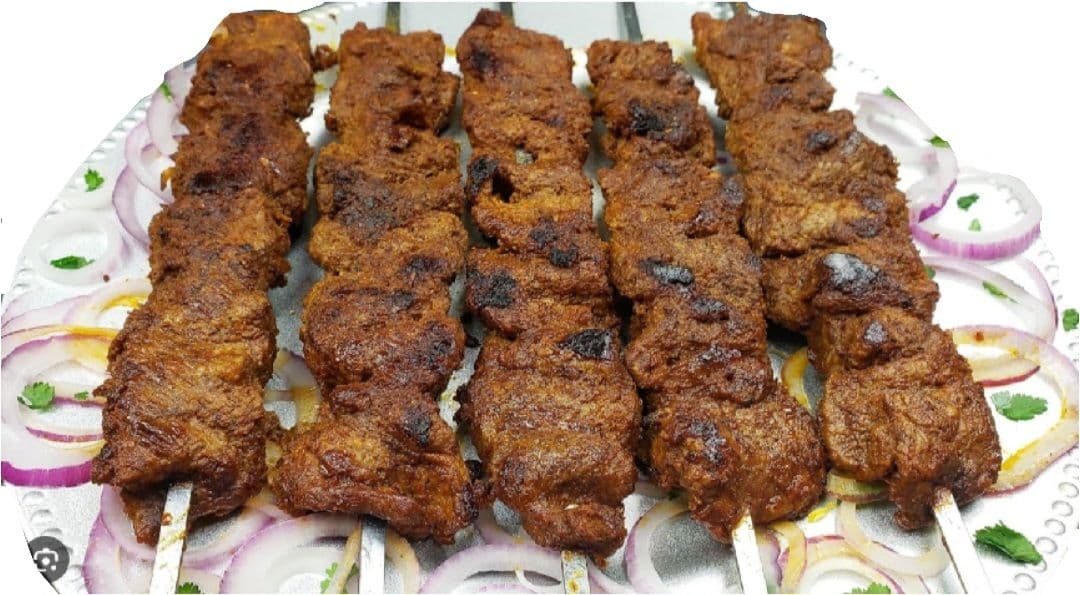
prep time
30 min
marinate time
10h
cook time
15 min
servings
5
Ingredients
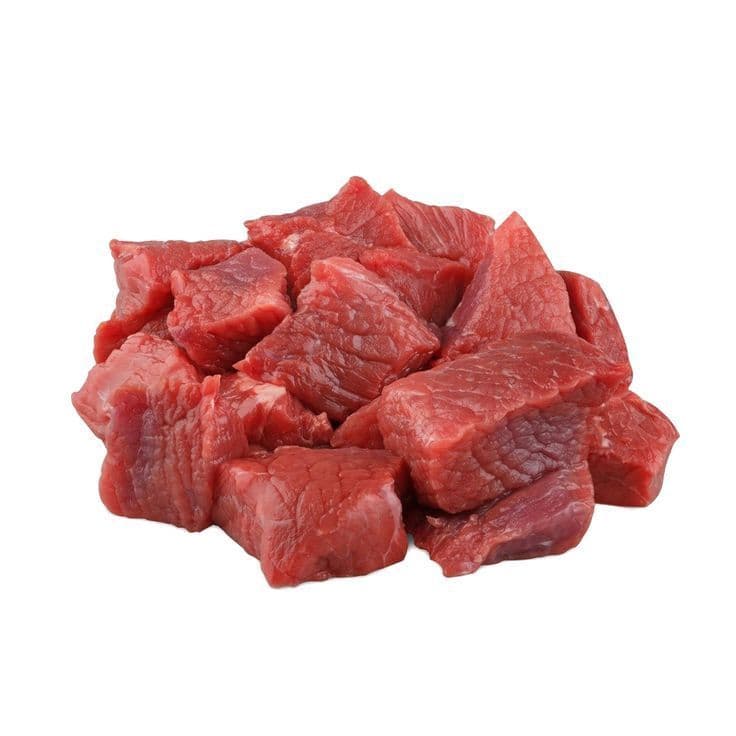 Beef1 Kg
undercut, or tenderloin
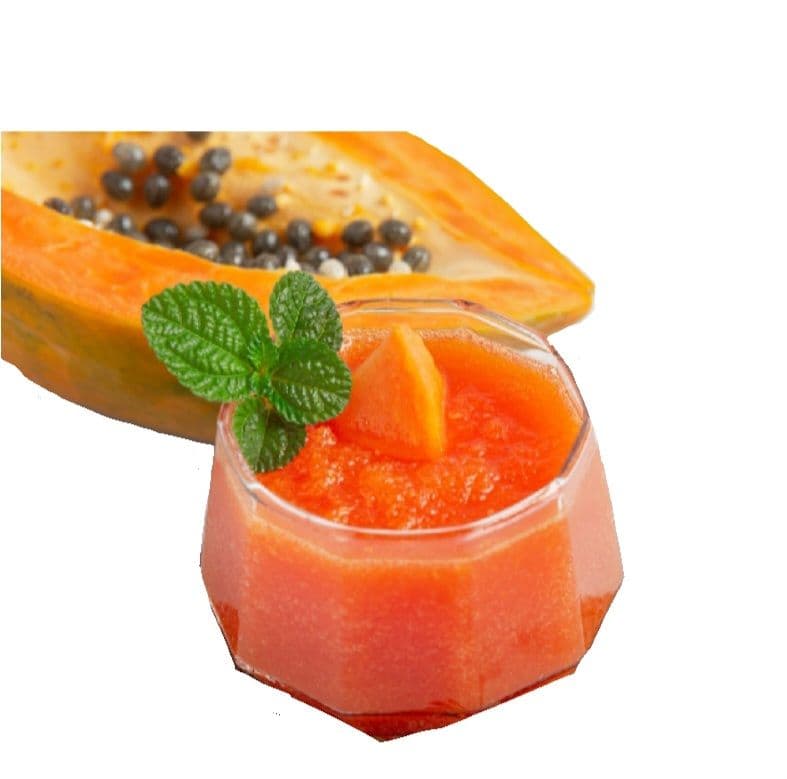 papaya paste2 tbsp
unripe green papaya, not yellow or ripe
 Yogurt0.5 cup
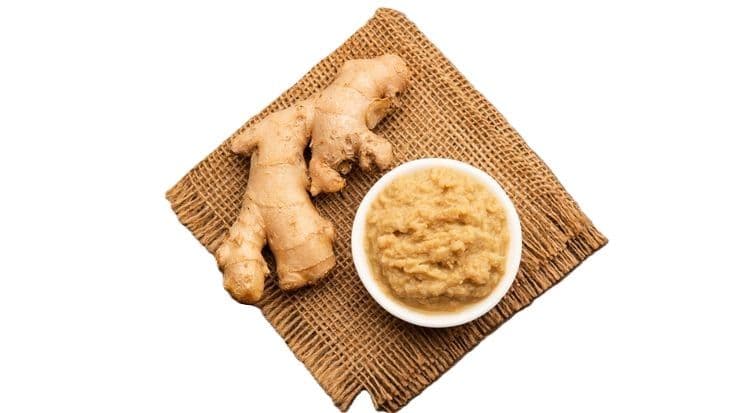 Ginger paste1 tbsp
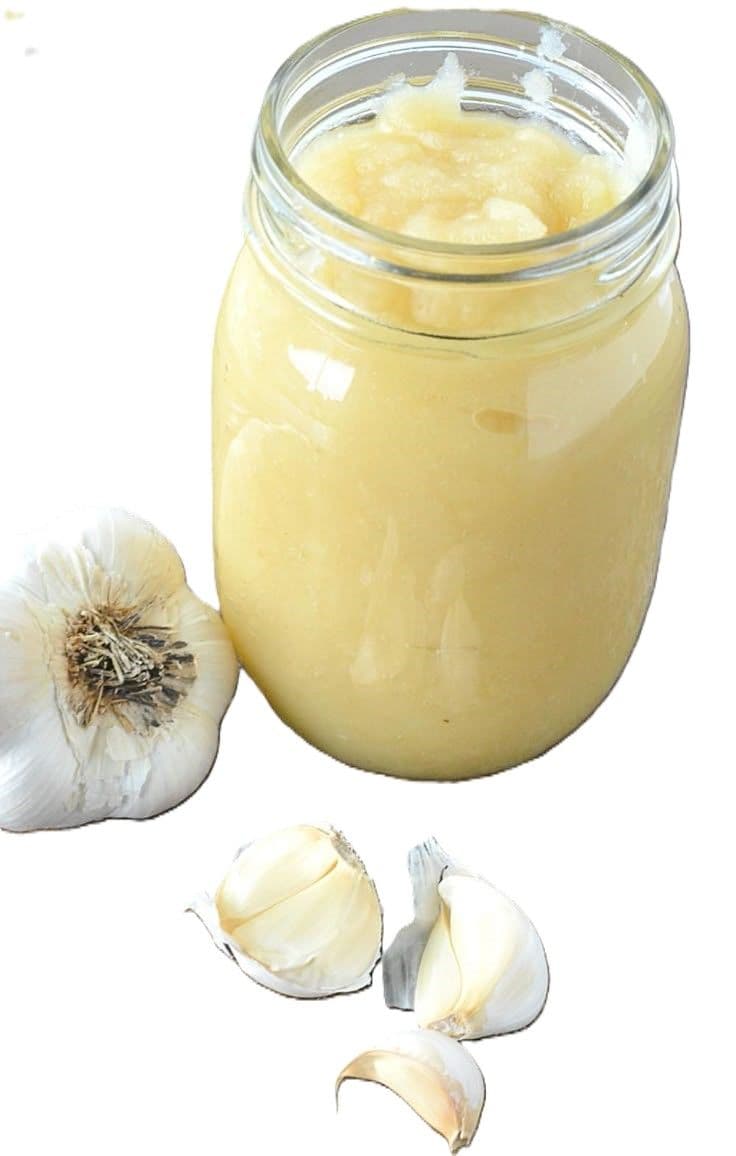 Garlic paste1 tbsp
Method
PREPARE AND CUT THE MEAT
Start with beef eye round, undercut, or tenderloin.
These three cuts have a muscle fiber structure that responds best to papaya tenderization and holds together on a skewer without falling apart during grilling.
Slice the beef into long, thin strips approximately 2 to 3 inches long and no more than 5 to 6mm thick.
Take time to cut every strip to the same thickness. Uneven strips cook unevenly, with thin ends drying out while thicker sections are still undercooked.
Once all strips are cut, lightly pound each one with a meat mallet a few times to begin opening the fibers before the marinade does its deeper work.
Chef's Tip:
Slice the beef when it is very cold or partially frozen. Cold beef holds its shape and cuts into clean, uniform strips much more easily than room temperature beef, which compresses under the knife and produces uneven cuts. Fifteen minutes in the freezer before slicing makes a noticeable difference to the consistency of the strips.
MAKE THE RAW PAPAYA PASTE
Select a papaya that is completely green on the outside with no yellow or orange showing anywhere on the skin.
Cut it open and the flesh should be white-green and firm with no sweetness or fruit smell at all.
Peel the papaya, remove the seeds, dice the flesh roughly, and blend with a small amount of water until completely smooth.
Measure out 2 to 3 tablespoons for this recipe.
Store the remainder in the fridge for up to two days or freeze in small portions for future batches.
Chef's Tip:
Test the papaya before buying by pressing the skin. It should be completely firm with no give at all. Any softness means it has begun to ripen and the papain enzyme content has dropped. If raw papaya is genuinely unavailable, raw kiwi or raw pineapple contain similar enzymes and can substitute in equal quantities. But raw green papaya is always the first choice
FRY THE BIRISTA (ONIONS)
Slice 2 medium onions into very thin rings, all the same thickness.
Heat enough oil in a deep pan for frying and set to medium flame.
Add the onion rings and fry, stirring regularly, for 18 to 22 minutes until they are a deep golden brown and completely crispy.
Remove and drain on paper towels. Allow them to cool and crisp up fully before crushing them between your palms into a coarse powder.
Do not rush the cooling step. Warm birista still has moisture in it and will not crush into the dry, powdery texture the marinade needs.
Chef's Tip:
Medium heat throughout the entire frying time. High heat browns the outside of the onion rings quickly but leaves the inside still wet, which means they go soggy rather than crispy after draining. Medium heat dries the onions from the inside out. When you drain them they look slightly underdone, but they crisp up significantly as they cool. This is exactly what you want
BUILD THE MARINADE
In a large mixing bowl, combine the papaya paste, yogurt, ginger paste, garlic paste, crushed birista, and fresh crushed onions.
Add all nine Bihari masala spices one by one: 2 tbsp red chillies powder, 2 tbsp coriander powder, 1 tbsp cumin seeds, 1 tsp ground black pepper, 2 tbsp garam masala, 0.5 tsp turmeric, 1/4 tsp nutmeg, ¼ tsp mace, ½ tsp citric acid or amchur, and 1 tsp salt.
Mix everything together. Finally, pour in the mustard oil and mix again until the marinade is thick, cohesive, and evenly combined.
It should look like a paste that will cling to the meat, not a liquid that will run off it.
Chef's Tip:
Add the mustard oil last, after all the dry spices are already mixed in. When mustard oil is added to dry spices it coats them and prevents them from fully dissolving into the yogurt and papaya base. Adding oil at the end and folding it through the fully combined marinade ensures everything is evenly distributed and the oil binds rather than separates the mixture
MARINATE THE BEEF
Add all the beef strips to the marinade bowl. Use your hands to massage the marinade into every surface of every strip.
Press it in, fold the strips over, and make sure no surface is left uncoated.
Cover the bowl tightly with cling wrap and place in the refrigerator.
The minimum marination time is 4 to 6 hours. The ideal time is 8 to 12 hours overnight. Do not marinate for longer than 24 hours.
The papain enzyme continues breaking down the proteins past the optimal point and over-marinated beef becomes mushy, loses its structural integrity, and falls off the skewer during grilling.
Chef's Tip:
Marinate in a non-reactive container, meaning glass, ceramic, or food-grade plastic. Avoid aluminium or uncoated steel bowls. The acidity of the yogurt and citric acid in the marinade reacts with certain metals and can produce a metallic taste in the meat over a long marination period. A large glass bowl with cling wrap pressed directly onto the surface of the marinade before putting the lid on gives the best result.
THREAD ONTO SKEWERS
Use flat metal skewers. Round skewers allow the strips to rotate freely when you turn them and produce uneven cooking.
Take a marinated strip and thread the skewer through it in a weaving or snake-like motion, passing the skewer in and out through the length of the strip rather than piercing one end only.
The strip should lie flat against the skewer with the full surface of the meat accessible to the grill.
Thread strips one after another on each skewer, leaving a small gap between each piece. If using wooden skewers, soak them in cold water for at least 30 minutes before threading.
Chef's Tip:
Do not thread the strips too tightly together on the skewer. Strips packed closely against each other trap steam between them and that area will steam rather than grill, producing a pale, soft patch in the middle of the kabab instead of a charred, caramelized surface. A small gap between each strip ensures every surface is exposed to direct heat
GRILL THE KABABS
On a charcoal grill, preheat until the coals are glowing white-hot with no black patches.
Place skewers over the coals and grill for 4 to 5 minutes per side.
Total cooking time is 8 to 10 minutes. The thin strips cook very quickly on high heat and the goal is a charred, caramelized exterior with a just-cooked center.
On a stovetop grill pan, heat the pan to medium-high with a small amount of oil and cook for 3 to 4 minutes per side.
In the oven, place skewers on a wire rack over a foil-lined tray, bake at 200 degrees Celsius for 12 to 15 minutes flipping once, then switch to the broiler for the final 2 to 3 minutes.
Chef's Tip:
The single most common mistake when grilling Bihari kabab is overcooking. Because the strips are thin and the papaya has already broken down the proteins significantly, the meat cooks through very quickly. One or two extra minutes beyond done takes the kabab from silky tender to dry and fibrous. Watch the edges of the strips, not the clock. When the edges have changed colour and the surface has visible char, check one strip by pressing it. It should feel firm but not hard. That is done
Secret Ingredient: Raw Green Papaya Paste
Raw papaya is not a shortcut ingredient or a trick. It is a fundamental part of what Bihari kabab is. The enzyme papain found exclusively in completely unripe green papaya works at a biochemical level that no other marinade ingredient can approach. It targets and breaks down the collagen proteins inside the beef muscle fibers from within, producing a tenderness that is genuinely different in quality from meat tenderized by acid, salt, or mechanical means.
Two to three tablespoons in the marinade is enough for 1 kg of beef. The papaya itself has no taste that transfers to the meat. You will not taste papaya in the finished kabab at all. What you will taste is beef with a silky, yielding, melt-against-the-char texture that makes people put down their naan and ask what you did. The papaya must be completely green.
Nutritions
Per Serving (approx. 180g)
People Also Ask
Eye round is the most commonly used and most authentic cut. Its tight, even grain responds very well to papaya tenderization and slices into clean, uniform strips that hold their shape on a skewer. Tenderloin is the most naturally tender option and produces a noticeably more luxurious result but at a higher cost. Undercut sits between the two in both price and tenderness. Avoid chuck, brisket, or shank. Their coarser grain and higher connective tissue do not respond as well to this style of preparation and tend to fall apart during grilling.
No. Mustard oil is not one option among several in this recipe. It is the defining aromatic ingredient that gives Bihari kabab its flavour identity. Its sharp, slightly pungent raw character mellows during grilling into a warm, nutty depth that no other oil produces. Without mustard oil you have well-seasoned grilled beef. It is not Bihari kabab. Do not heat it before adding to the marinade. It goes in raw.
The optimal marination window is 8 to 12 hours overnight. The minimum for acceptable tenderness is 4 to 6 hours. The maximum before the papain over-tenderizes the meat and makes it mushy is 24 hours. Beyond 24 hours, the enzyme has broken down the proteins past the point of tenderness into a soft, structureless texture that does not hold on a skewer and falls apart during grilling. Marinate for 8 to 12 hours for the best result and cook within 24 hours of starting the marinade.
Yes. Chicken Bihari kabab is a popular variation. Use boneless chicken thighs rather than chicken breast because breast meat dries out very easily on a grill. Reduce the papaya marination time to 2 to 4 hours maximum. Chicken requires significantly less tenderization than beef and over-marinating with papain makes the chicken unpleasantly soft and mushy. All spice quantities and the mustard oil quantity remain the same as the beef version.